Author

Michael Anderson

Browsing

The moon is such a fascinating celestial body that orbits our planet, and it’s been doing so for about 4.5 billion years.

It’s the fifth-largest moon in our solar system and the second-densest satellite among those whose densities are known.

When we look up at the night sky, we’re often greeted by the moon’s silvery glow, which is actually sunlight reflecting off its surface.

Growing up, I cherished those moments of laughter and joy, especially when shared with family and friends under the night sky.

It’s those memories that inspired me to compile a collection of moon-themed puns and jokes that are out of this world!

So join me as we go through 150 Moon Puns and Jokes For Kids and all the joy and laughter they bring to our lives.

Key Takeaways

  • The article offers a wide variety of moon-themed jokes, ensuring a diverse range of humor that appeals to different interests and age groups.
  • Each section of the article is thoughtfully categorized with humorous headings, making it easy and fun to navigate through the different types of lunar laughs.
  • The jokes are crafted to be age-appropriate, ensuring that they are suitable for children while still being entertaining enough for the whole family.
  • The content not only serves to entertain but also subtly educates kids about lunar concepts and space terminology through playful wordplay.
  • This collection of jokes can be a great tool for parents and educators to use as ice-breakers or to infuse a little light-heartedness into learning about space and astronomy.

Moon Puns

Get ready to giggle like you’re weightless! These moon jokes are so cheesy, and they might just be made of mozzarella.

  • Why did the Moon go to the comedy club? Because it wanted to hear some out-of-this-world jokes!
  • What’s a Moon’s favorite subject in school? “Astronome-tree”!
  • Why did the moon rock feel sad? Because it just wanted to be a little boulder!
  • How does the moon cut his hair? Eclipse it!
  • What kind of music do moons love? Neptunes!
  • Why did the Moon cut his hair? To eclipse it!
  • How does the Moon get their toenails cut? He eclipses them!
  • What do you call a moon that can’t keep a secret? A blabber-moon!
  • Why don’t asteroids ever hit the moon? Because it has no atmos-fear!
  • What do you call cheese made on the moon? Slice of Luna!
  • What do you call a moon that likes to body build? A lunar swole!
  • Why did the moon get a low score on his test? He was just going through a phase!
  • I ordered a cheese pizza from the moon. When it arrived, it had no cheese at all! What a lunar-see!
  • Did you hear about the restaurant on the moon? Great food, no atmos-fear!
  • What do you call a moon that works as a farmhand? A lunar tick!

Tip: Pair these jokes with a fun space-themed activity to keep the laughter and learning going!

And for those who love bear jokes for kids, don’t worry, we’ve got a universe of humor waiting for you too!

Just imagine a bear on the moon – talk about a space oddity!

Share your feedback and let us know if these jokes send your sense of humor into orbit or have you over the moon with laughter.

Your insights help our humor stay as cosmic and entertaining as the lunar landscape itself, with puns that keep the laughter in orbit! 🌕🚀😄

Great Moon Jokes

  • Why did the moon rock feel under the weather? It just needed a little space!
  • What do you call a tick on the moon? A luna-tick!
  • How does the moon cut his hair? Eclipse it!
  • How does the Moon cut its toenails? It eclipses them!
  • Why did the astronaut break up with the moon? Because it needed space!
  • How do you throw a party on the moon? You planet!
  • What do you call a moon that has fled from the police? A Luna-tic!
  • Why don’t moons ever seem to be hungry? They’re always full!
  • What kind of shoes do moons wear? Eclipse!
  • Which moon loves to play video games? Saturn because it has amazing rings!
  • Why doesn’t anyone want to play cards with the moon? Because it always shows the same face!
  • How does the man in the moon cut his hair? Eclipse it!
  • What happens when two moons collide? There’s a meteor shower!
  • What do you call a moon that opens a bakery? A Luna tick!
  • Why can’t you ever believe what the moon says? It goes through phases!

Moon Phase Jokes

Moon phases: a humorous take on the changing lunar appearance in a series of comical illustrations

Why did the new moon get a job? Because it needed to eclipse the competition!

And what do you call a clock on the moon? A lunar-tick!

Here’s a quick list of new moon silliness to share with your little astronauts:

  • How does the moon cut its hair? Eclipse it!
  • What kind of music do moons like? Something with a good orbit.
  • Why did the moon go to school? To get a little brighter!
  • Why did the Moon go to school? To get a little brighter!
  • What kind of music do lunar teens listen to? Moon rock!
  • How does the Moon cut his hair? Eclipse it!
  • Why did the moon go to school? To get a little brighter!
  • How does the moon cut his hair? Eclipse it!
  • What kind of music do moons love? Something with a good orbit!
  • What did the full moon say to the new moon? I’m really looking forward to seeing your crescent self!
  • Why was the waning crescent moon so upset? It felt like everyone was giving it the cold shoulder.
  • How did the third quarter moon feel when it had to go back to school? Like it was facing another eclipse!
  • What kind of grades does the full moon get on its homework? Full marks!
  • Why was the waxing gibbous moon having a bad hair day? Because it was going through a phase!
  • What do you call a dangerous fight between two crescent moons? A double eclipse!

Moon and Space Humor

  • Why did the sun go to school? To get a little brighter!
  • How do you throw a space party? You planet!
  • What kind of music do planets like? Neptunes
  • Why did the Moon go to the comedy club? Because it wanted to hear some out-of-this-world jokes!
  • What’s a Moon’s favorite subject in school? “Astronome-tree”!
  • How do you greet a Moon in the morning? “Goodnight, Moon”!
  • Why did the Moon become a space photographer? Because it wanted to capture interstellar moments!
  • What’s a Moon’s favorite type of book to read? Science fiction!
  • What do you call an astronaut who steps on your foot? A moon-walker!
  • Why don’t aliens ever visit our solar system anymore? Because there’s no atmosphere!
  • How does NASA organize their company parties? They planet!
  • What kind of music do planets sing? Nep-tunes!
  • How do rockets see? They use their satel-eyes!
  • Did you hear about the restaurant on Mars? Great food, no atmosphere!
  • What do you call a sleeping moon? A nap-tune!

Star Jokes

  • How do you organize a space party? You planet!
  • What do you call a tick on the moon? A lunatic!
  • Why did the sun go to school? To get a little brighter!

Always remember: A day without laughter is a day wasted, especially when you’re floating in the zero-gravity zone of fun!

  • Why did the sun go to school? To get a little brighter!
  • What do you call a tick on the moon? A luna-tick!
  • How do you organize a space party? You planet!

Here are a few moon-inspired jests to add a sparkle to your evening:

  • Why did the moon go to school? To get a little brighter!
  • How does the moon cut his hair? Eclipse it!
  • What do you call a star that likes to dance? A shooting star!
  • Why can’t you ever trust stars? Because they often wander and are spaced out!
  • Where do baby stars come from? The star-kery of course!
  • What’s it called when stars clash into each other? Star-crossed lovers!
  • Why do stars always seem sleepy? They’re constantly falling into bed!
  • How do stars stay connected? Through their constel-lation!
  • What’s the brightest star in the sky? The star that shone tonight, of course!

Funny Moon Jokes

When the full moon rises, not only do the werewolves come out to play, but so do the howling good jokes!

  • Why did the werewolf comedian win the competition? Because he was the howl of the party!
  • What do you call a lycanthrope who tells jokes? A stand-howl comedian!
  • How do werewolves keep their fur looking nice? With a moonicure!
  • How do you make a Moon laugh? Tell it a “crater” joke!
  • What’s a Moon’s favorite bedtime story? “Goodnight, Earth”!
  • Why did the Moon go to the comedy club? Because it wanted to hear some “out-of-this-world” jokes!
  • Why did the Moon become a DJ? Because it wanted to play some space tunes!
  • What do you call a lunar fashion show? A moonwalk!
  • Why was the Moon feeling tired? Because it had too many light years!
  • What phase was the moon in when the astronauts landed on it? The full moon, of course!
  • Why doesn’t anyone want to play poker with the moon? Because it has four quarters every night!
  • How did the moon know what to wear to the astronauts’ party? He read the star chart!
  • What do you call a werewolf who does stand-up comedy? A howl-a-rious comedian!
  • Why can’t you trust an alien werewolf? Because they constantly shift their space and time!
  • Why do moon party planners need lots of supplies? In case a meteor shower happens!

Space Jokes

  • How do astronauts organize their week? They planet!
  • Why did the Moon start a space-themed fitness program? To achieve cosmic health!
  • What’s a Moon’s favorite way to meditate? Practicing lunar mindfulness!
  • How do you put a spaceship to sleep? You rocket.
  • Why do astronauts get sick? They have anty-bodies.
  • What do you call an alligator in a vest? An investi-gator.
  • Why don’t astronauts get hungry after dinner? Because they’ve just had a big bang of a meal!
  • How do you throw a space party? You planet!
  • What’s an astronaut’s favorite part of a computer? The space bar.
  • Why can’t you hear astronauts go to the bathroom? Because they go on the fly!
  • How do astronauts serve dinner on the ISS? On flyin’ saucers!
  • Why did the sun bring sunglasses to work? Because its job was ultraviolet!
  • What do you call an astronaut who walks on Mars? Neil Arm-strong!
  • Why did NASA go to the butcher shop? To buy space ribs!
  • How do astronauts condition their hair? With meteor showers!

Rocket Jokes

  • Why did the astronaut break up with the rocket? Because it had too much baggage!
  • What do you call a spaceship that’s bad at sports? A spaceball drop-out!
  • How do astronauts serve dinner? On flying saucers!
  • How do you throw a space party? You planet!
  • Why don’t rockets ever get stressed? They always escape the atmosphere!
  • What do you call a lovestruck astronaut? A star-crossed spacer!
  • How do astronauts organize their week? They planet!
  • Why did the Moon go to the comedy club? Because it wanted to hear some out-of-this-world jokes!
  • What’s a Moon’s favorite game to play with Earth? “Hide and meteor-seek”!
  • Why don’t rockets like hot days? Because it melts their ice cream cones!
  • How do rockets see? They use their satel-eyes!
  • What do you call an rocket that skips school? A truant in space!
  • Why was the rocket fired from NASA? Because it was orbiting around its tasks!
  • Where do baby rockets come from? The rocket nursery!
  • What kind of books do rockets like to read? Launch and learn books!

Star Comedy

  • What’s a Moon’s favorite game to play with Earth? “Hide and meteor-seek”!
  • How do you make a Moon laugh? Tell it a “crater” joke!
  • What’s a Moon’s favorite bedtime story? “Goodnight, Earth”!
  • What do you call an asteroid with a great sense of humor? A cometian!
  • Why was the asteroid always invited to parties? Because it was a blast!
  • How do asteroids stay clean? They take a meteor shower!
  • Why don’t comets ever trust the sun? Because they think it’s a little too shady!
  • What do you call a comet that loves to read? A shooting bookmark!
  • What do you call a star that likes to dance? A shooting star!
  • Why don’t stars ever want to compete in races? Because they always lose by a light year!
  • What kind of grades do stars get in school? Shooting stars!
  • Why was the star student so bright and shiny? She was clearly aiming to be a star!
  • How did the star get arrested after playing tennis? He served time for smashing too many planets!
  • What do you call two stars that collide into each other? Star-crossed lovers!
  • Why was the star ashamed at the astronomy exam? He got demoted to a dwarf for cheating!

Nighttime Moon Jokes

A plane soaring above moonlit mountains, creating a captivating nocturnal scene

  • How does the Moon cut its hair? Eclipse it!
  • Why did the Sun go to school? To get a little brighter!
  • What do you call a tick on the Moon? A lunatick!
  • Why did the moon go to school? To get a little brighter!
  • What do you call a clock on the moon? A lunartick!
  • How does the man in the moon cut his hair? Eclipse it!
  • How do you throw a space party? You planet!
  • Why did the Sun go to school? To get a little brighter!
  • What do you call a tick on the moon? A luna-tick!
  • What do you call a moon that can’t keep a secret? A blabber Moon!
  • How does the moon get to school? On it’s lunar cycle!
  • What kind of music does the moon like listening to? Anything that makes it hip-hop!
  • Why can’t the Moon have dessert? It’s always too full!
  • What happened to the cow that jumped over the moon? It made a milky way!
  • Why did the moon go to the dentist? It had a meteor!

Conclusion

Using puns and jokes can be a fun way to engage kids and get them interested in learning about the 🌙✨ moon and space.

Plus, it’s a great way to make learning about the moon more enjoyable and memorable for them.

I can’t wait for you to read them and share the laughter with your little astronauts.

So go ahead and share these puns and jokes with the kids in your life and have a blast exploring the wonders of the moon together!

Frequently Asked Questions

Why Are Moon Jokes So Popular Among Kids?

Moon jokes are popular among kids because they combine silly humor with fascinating celestial themes, sparking both laughter and curiosity about space.

Can Moon Jokes Be Educational?

Yes, moon jokes can be educational by introducing space-related terms and concepts in a fun and memorable way, encouraging children to learn more about astronomy.

Are These Moon Jokes Suitable for All Ages?

Absolutely! These moon jokes are designed to be family-friendly and are perfect for kids of all ages to enjoy.

How Can I Use Moon Jokes to Engage with My Child?

You can use moon jokes as conversation starters, during bedtime storytelling, or as a fun activity to share laughter and bond with your child.

What is that one lesson that you still remember? Or who is that teacher you cherish in your forever memory?

Surely, the lesson you still remember must be the one that involved some fun activity or games, and the favorite teacher must be the one who incorporated such fun and interactive teaching methods.

Today’s idea of fun and games is largely limited to mobile games or online apps.

Even in schools, teachers use smart devices and technology to make children understand complex concepts in a fun way.

When it comes to interactive games and fun quizzes for learning aids, there are plenty of options for subjects like maths, history, etc.

Similarly, we will look at a fun and interactive geography quiz for kids.

This blog will see what kind of interactive geography quizzes for kids are available online.

Interactive Online Geography Quizzes

When discussing academics, we say how difficult mathematics can be with all its numbers and calculations.

Similarly, even history has gotten its fair share of recognition for being a subject that requires extra and unique teaching methods.

However, geography is often overlooked as a subject that includes the names of a few rivers, mountains, and cities.

However, the truth is that geography is as interesting and complex a subject as any other.

A proper interest in the subject can open many future career opportunities for your kids.

From architects to explorers, your child can do great with the right geography knowledge.

To make the subject fun, below are a few online interactive geography quizzes for kids.

1. Where on Earth Is Carmen Sandiego?

A picture of Carmen Sandiego, the famous international thief and elusive character from the educational game series

Well, the name is surely interesting to begin the list with.

This interactive geography quiz game is based on a concept in which the player is on a mission to catch a world-known criminal mastermind, Carmen Sandiego.

The player is given clues using which they have to find out which country or city Carmen San Diego could be hiding in.

Besides being an interesting game to recall your geography knowledge, this game gives a complete mission and target feel, making learning addictive.

2. Zoomtastic

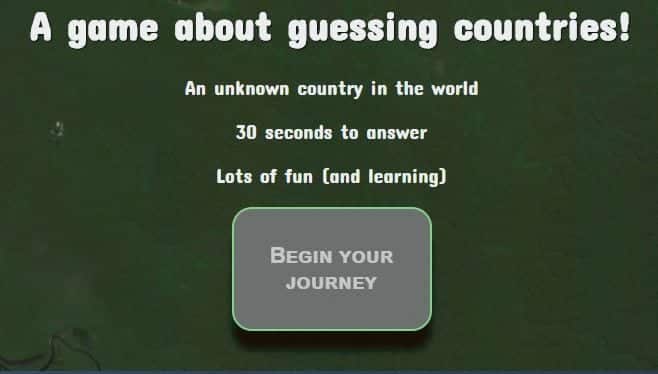
A captivating game where players guess countries worldwide. Engage in Zoomtastic fun while exploring the globe!

In this game, the player is shown a zoomed-in map of a country, and every 3 sec, the map zooms out, revealing the other details in the country, such as the lakes, mountains, rivers, etc, and at 10 sec, the player is given four options to choose from.

The whole game is to guess the country’s name in 30 seconds.

This game not only enhances the knowledge of countries around the world but also helps in memorization as it shows various physical features of the country.

3. Seterra

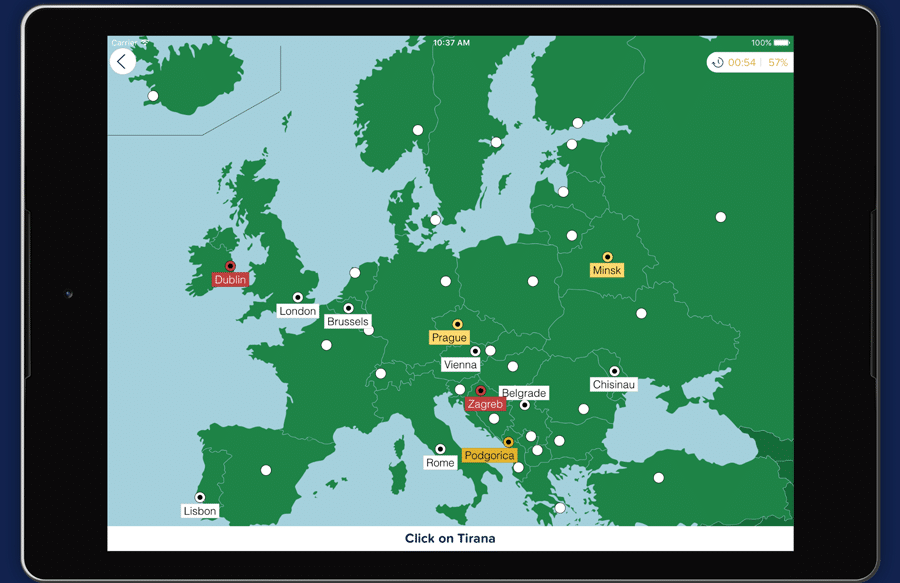
An interactive geography learning tool with maps, quizzes, and games. Explore the world and test your knowledge

This website has multiple fun and interesting geography quiz games.

It offers not only interactive quizzes but also interesting short videos about geography. There are several embedded learning tricks, mnemonics generators, etc, on the website.

When a user enters the game mode, they must answer the quiz question by clicking, typing, or labeling the correct answer on the map.

4. GeoNet

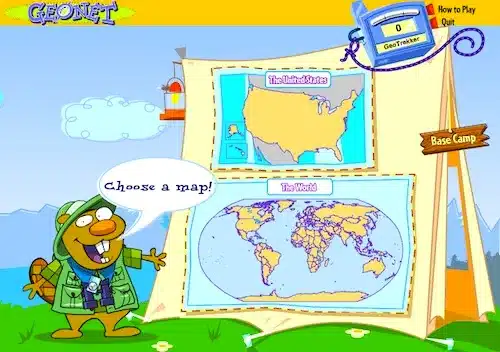
A cartoon character with a map engages in conversation with a person. Illustration for GeoNet

This game segregates geography into three branches to make it easy to surf through physical, human, and environmental.

The best part about the game is that it’s easy to handle, and the simple structure makes it fun and hassle-free for young kids.

It has multiple levels to give the child a sense of accomplishment.

5. GeoBee Challenge

Screenshot thumbnail of GeoBee Challenge, a geography quiz game.

You must have heard of SpellBee. Well, on similar lines is this geography quiz game, GeoBee.

It is created by National Geographic, in which the player’s knowledge is tested through several questions based on physical and human geography.

It gives an overall competitive feel to the kids.

6. GeoGuessr

A geospatial search engine called GeoGuessr.

This is the most new age-style geography interactive quiz game.

In this game, the player is given a random street view and uses the Google Maps street view feature.

They must search around 360° and find the clues to guess the correct location.

This game is built so that while being an interactive quiz, it gives the player a real-time feeling.

Summing It Up

So, one thing is sure: the world is shrinking, and the modes to explore the world are expanding.

And this must be leveraged in all its best ways to help our young kids excel through life and get the best of what they deserve.

Geography is a dynamic subject. Unlike maths or history, it won’t stay the same.

Mountains erode, rivers dry up, so children must understand the subject to its core and in ways that entice them the most, i.e., through interactive quizzes.

If computers have become a part of our lives so deeply, let’s utilize them to their best.

Educating kids while traveling offers a unique and enriching experience that goes beyond traditional classroom learning. For starters, travel provides hands-on, real-world experiences that can’t be replicated in a classroom. Talk of historical sites, museums, and natural wonders which are some of the interactive learning environments your kids can learn from.

You can even choose to blend your travel experiences with more traditional forms of education, in a way that strikes the right balance for your kids. Well, this article will help you explore the myriad ways in which you can provide a rich and unconventional education for your children while on the road.

Learning Through Cultural Immersion

Again, traveling will offer a remarkable opportunity for your children to immerse themselves in diverse cultures, fostering a deep understanding and appreciation for the world’s richness. Unlike textbooks and lectures, experiencing different cultures firsthand imparts lessons that go beyond mere facts.

From sampling local cuisines to participating in traditional ceremonies, your children can gain insights into the intricacies of global societies, promoting empathy, tolerance, and cultural intelligence.

For instance, a family exploring the markets of Marrakech not only learns about the vibrant colors and textures but also engages in bargaining, understanding the local economy, and practicing basic language skills. Such experiences instill a cultural awareness that is difficult to replicate in a traditional classroom setting.

Language Acquisition Through Travel

One of the most effective ways to learn a language is through immersion. While traveling, your children can have the opportunity to engage with native speakers, enhancing their language skills naturally. Whether its negotiating prices in a local market, ordering food at a restaurant, or simply conversing with locals, these practical language experiences are invaluable.

Additionally, you can take language learning a step further as a family by enrolling in local language classes, hiring tutors, or participating in language exchange programs. The ability to communicate in different languages opens doors to new friendships, expands cognitive flexibility, and prepares children for a globalized world.

Another option is to supplement immersion experiences with structured learning. You can explore options like enrolling your children in language classes, hiring an online language tutor, or working with a face-to-face language instructor.

Moreover, utilizing language apps can provide interactive and convenient ways to practice vocabulary, grammar, and pronunciation. By combining immersion experiences with structured learning methods, your children can develop a well-rounded proficiency in a new language, which will benefit them socially, academically, and professionally in the future.

Mathematics in Real-life Context

It is no secret that the abstract concepts taught in math classrooms can often feel disconnected from real life. Traveling provides numerous opportunities to make math tangible and practical. From calculating distances between destinations to managing a budget for the trip, your children can apply mathematical concepts learnt in the classroom in real-life scenarios.

For example, planning routes, estimating travel times, and converting currency are all mathematical skills that can be honed on the road.

Science in Nature’s Classroom

Traveling often takes families to breathtaking natural landscapes, turning the great outdoors into an unconventional classroom. Whether it is the Amazon rainforest, the Grand Canyon, or any other fascinating destination, your children will have the chance to study ecology, geology, and biology in their natural habitats. Learning becomes an adventure as they observe wildlife, identify plant species, and understand the delicate balance of ecosystems.

As parents, you can incorporate hands-on activities like nature hikes, bird watching, and even camping, allowing your children to connect with the environment on a personal level. Lessons learned in nature often translate into a profound respect for the environment, fostering a sense of responsibility towards the planet.

History Comes Alive

History is no longer confined to dusty textbooks when families embark on a journey through historical sites. The ruins of ancient civilizations, medieval castles, and revolutionary landmarks become living textbooks, telling stories that captivate young minds. Whether it is walking the cobblestone streets of Rome, taking a guided tour from https://amsterdamtickets.tours to the iconic Vincent Van Gogh Museum or exploring the pyramids of Egypt provides an immersive history lesson, making the past tangible and relevant.

You can enhance the experience by incorporating storytelling, role-playing, and interactive activities. Rather than memorizing dates and events, children absorb historical knowledge by experiencing the remnants of the past firsthand. This unconventional approach makes history a vibrant and engaging subject, fostering a love for learning that extends beyond the classroom.

Creativity and Critical Thinking

Unstructured travel experiences stimulate creativity and critical thinking. Children are faced with novel situations that require them to think on their feet, solve problems, and adapt to new environments. Exploring unfamiliar landscapes, tasting exotic cuisines, and encountering different art forms inspire creativity and broaden their perspectives. The ability to think critically and creatively becomes a natural outcome of navigating the challenges presented by a life on the road.

In addition, traveling also will expose your children to a variety of social situations, helping them develop essential interpersonal skills. Meeting new people, navigating unfamiliar environments, and adapting to different cultural norms contribute to their social growth. Moreover, interacting with peers from diverse backgrounds during their travels helps foster empathy, tolerance, and a global perspective.

Resilience and Independence

Furthermore, traveling often if not always involves unexpected challenges, from missed flights to language barriers. These challenges provide invaluable life lessons, that will help teach your children resilience, adaptability, and independence. Learning to navigate unfamiliar territories fosters a sense of self-reliance and resourcefulness that cannot be acquired within the confines of a traditional classroom.

Balancing Travel and Formal Education

While the benefits of educating children while traveling are undeniable, it’s essential to strike a balance between experiential learning and formal education. Many families opt for homeschooling or enroll their children in online programs to ensure continuity in their education. Integrating formal education with travel experiences allows children to reap the benefits of both worlds, combining structured learning with the richness of real-world experiences.

Project-Based Learning

Finally, traveling allows families to embrace project-based learning, a hands-on approach that encourages exploration and creativity. Whether it’s documenting a travel journal, creating a video documentary, or conducting scientific experiments, your children can actively participate in the learning process. Projects tailored to their interests not only deepen their understanding of various subjects but also cultivate critical thinking and problem-solving skills.

For example, a family traveling through Southeast Asia might engage in a project about marine life, researching and documenting the diverse ecosystems they encounter. This approach fosters a sense of ownership over their education, making learning a self-directed and fulfilling endeavor.

Wrapping up

The road to knowledge is not always paved with textbooks and classrooms. Educating your children while traveling will offer a unique and unconventional approach that taps into the vast resources of the world as a classroom. From cultural immersion and language acquisition to hands-on experiences in math and science, the opportunities for learning on the road are boundless. As families increasingly recognize the value of experiential education, the road less traveled may, in fact, be the most enriching path to knowledge for the next generation.


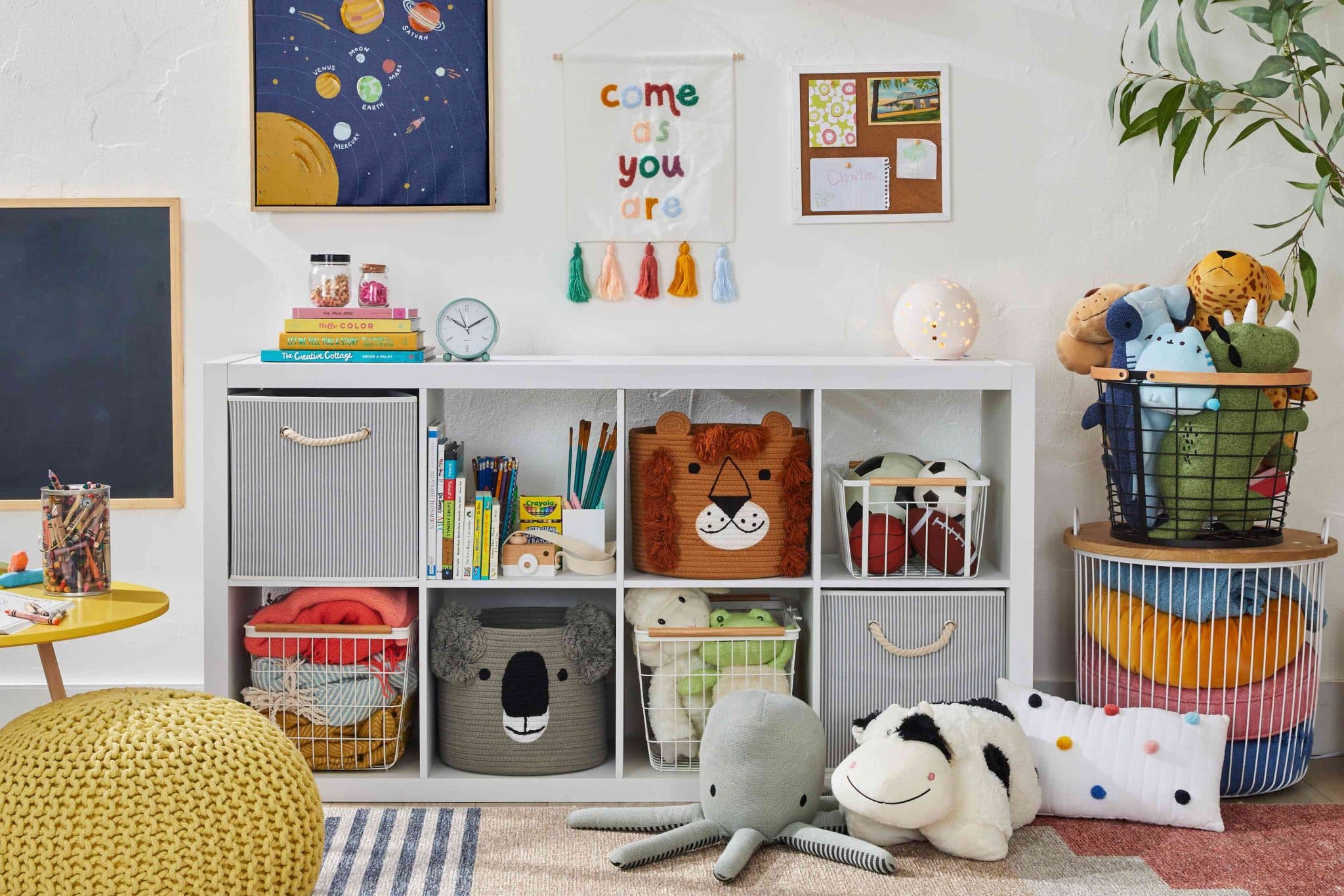
Sharing an apartment with children means you will always, in some way or the other, be falling short of space for your belongings or theirs!

Be it their clothes, toys, books, or shoes – children never have enough, and this results in clutter.

Even the most organized-looking space has skeletons in the closet, but that’s the trick – you will never find them!

And with some of the most tricky hidden toy storage ideas, you too can, most efficiently, give your shabby and disorganized apartment a gorgeous makeover, irrespective of how small it may seem.

Yes, That’s what we will be discussing in this article – how to utilize the limited space in your apartment to hide toys so it looks spick and span, and you don’t have to worry about surprise guest visits.

How Do You Store a Lot of Toys in a Small Space?

How Do You Store a Lot of Toys in a Small Space?

The living spaces, especially those with many options, have got immensely crammed up.

But then, when you have kids, even an otherwise exhaustive open space never seems enough.

Does that mean you must throw away your little one’s old toys every time they buy a new one?

Or does it seem practical enough to never buy a new toy for them again? Technically, neither stands right.

We understand your dilemma. And that is why we have developed simple yet effective toy storage ideas for small spaces.

Before heading to our listicle, consider our well-curated option with detailed hidden toy storage ideas to get the best options.

So, without any further ado, let’s begin and keep reading till the end to find more options to upgrade your complete setup.

10 Best Toy Storage Ideas

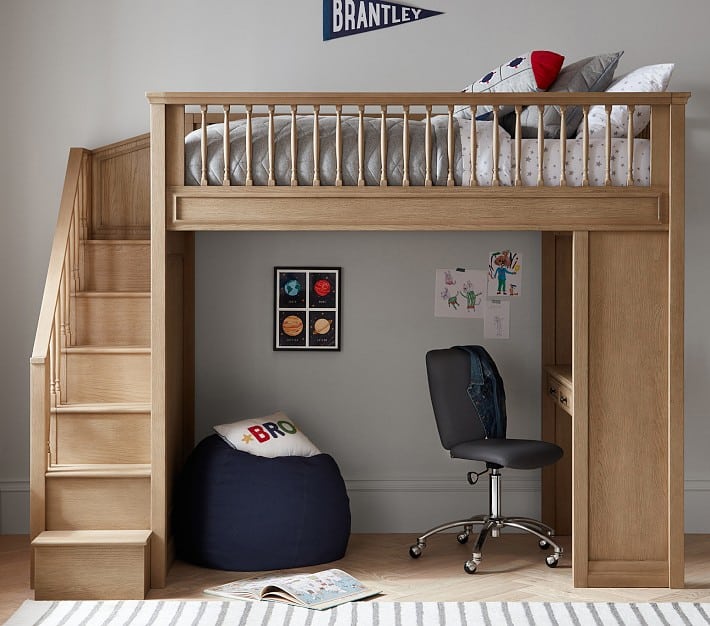
1. Loft Bed

Loft Bed

This is undoubtedly one of the best toy storage solutions, especially when there is a dearth of space.

It helps to organize your kid’s toys effectively and gives your children the freedom to play with them whenever they want to and then store them soon after.

2. Storage Ottomans

Storage Ottomans

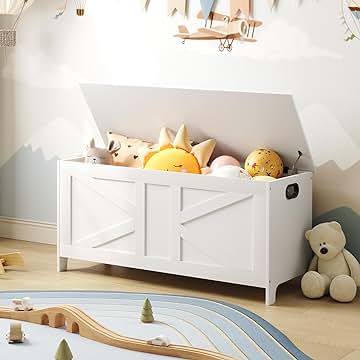
A classic toy storage idea, storage ottomans double up as an elegant room decor.

However, the best feature it serves is that you can categorize toys in baskets and store them as a whole.

3. Zipper Beanbags

Zipper Beanbags

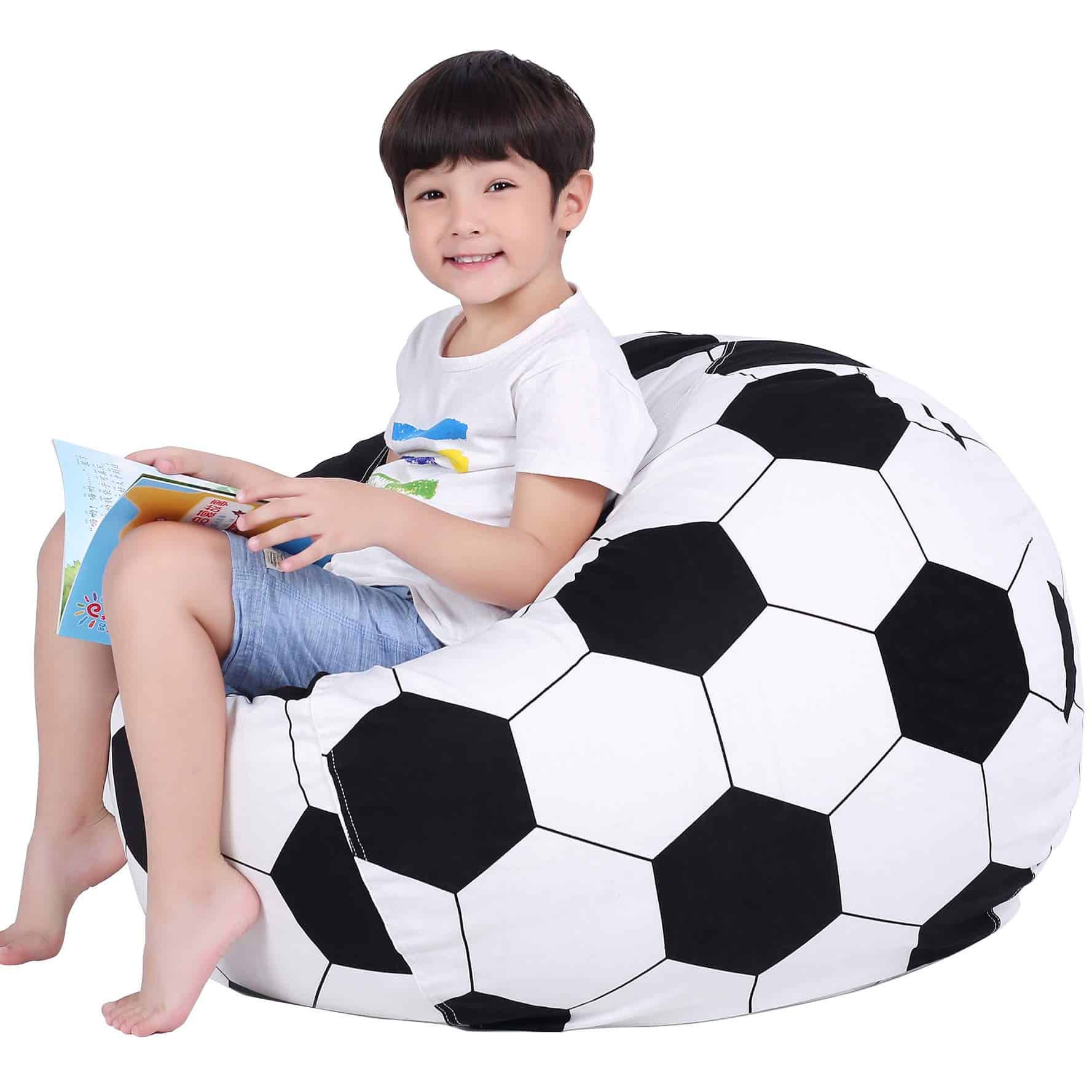
There is an extremely rare possibility that your kids won’t love beanbags.

If you don’t have one, try to get one. We guarantee your child will love them, especially when they can stuff their toys after a long and tiring play!

4. Hooks and Racks

Hooks and Racks

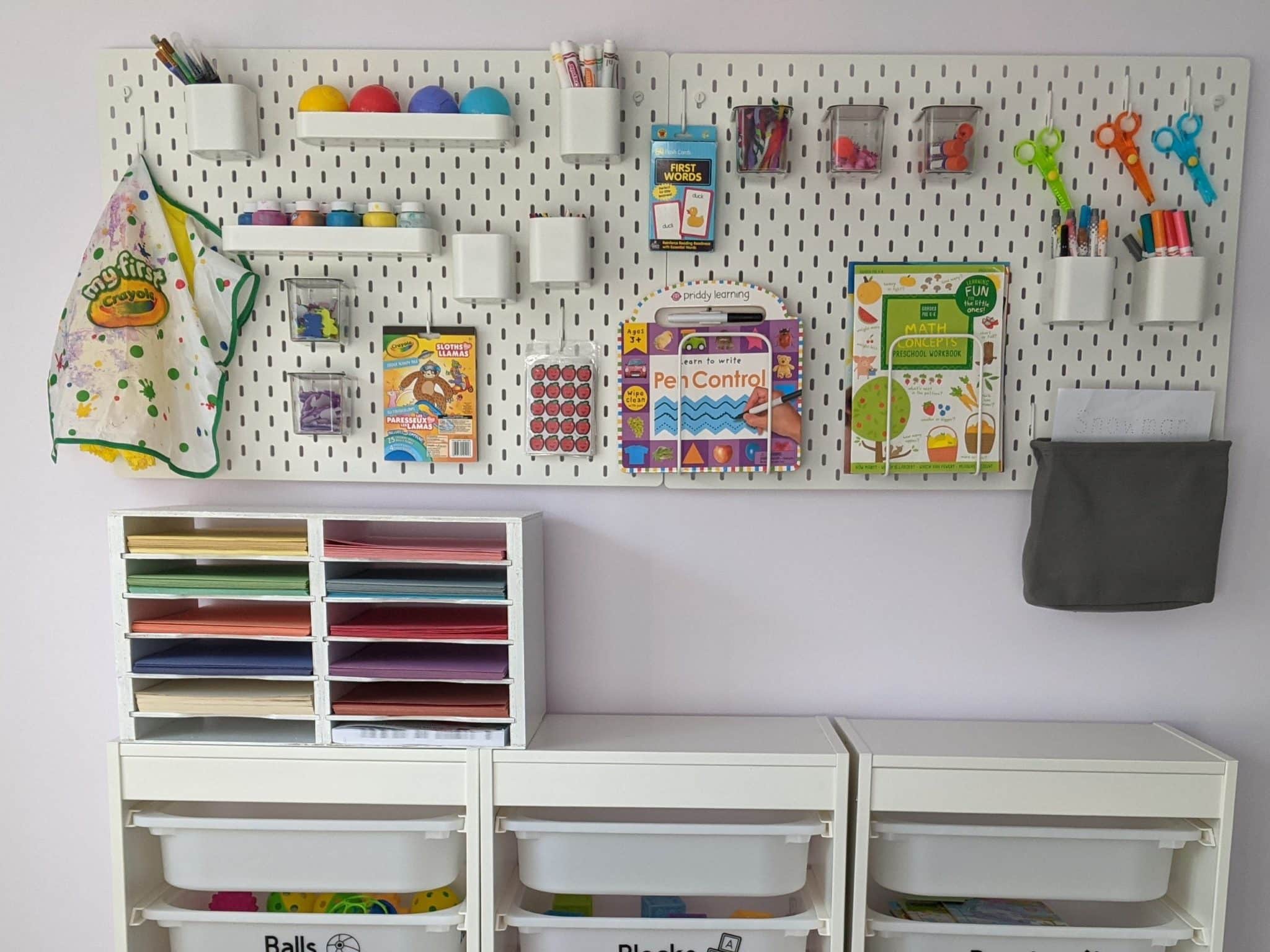
We know that hooks and racks serve practical purposes, but have you ever used them to hide toys in the living room?

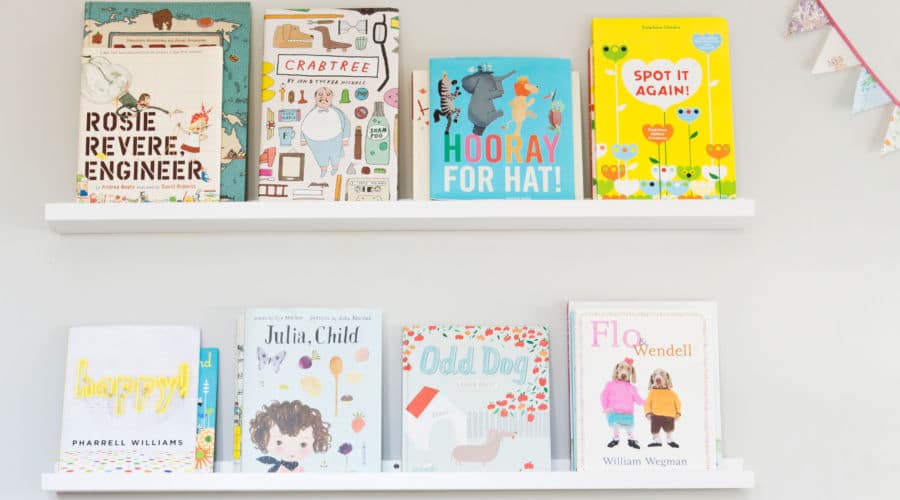
Hang your child’s play instruments, sort and stack their coloring books and miniature toys on racks, and hand them the responsibility of taking care of the area in the best possible way.

5. Woven Baskets

Woven Baskets

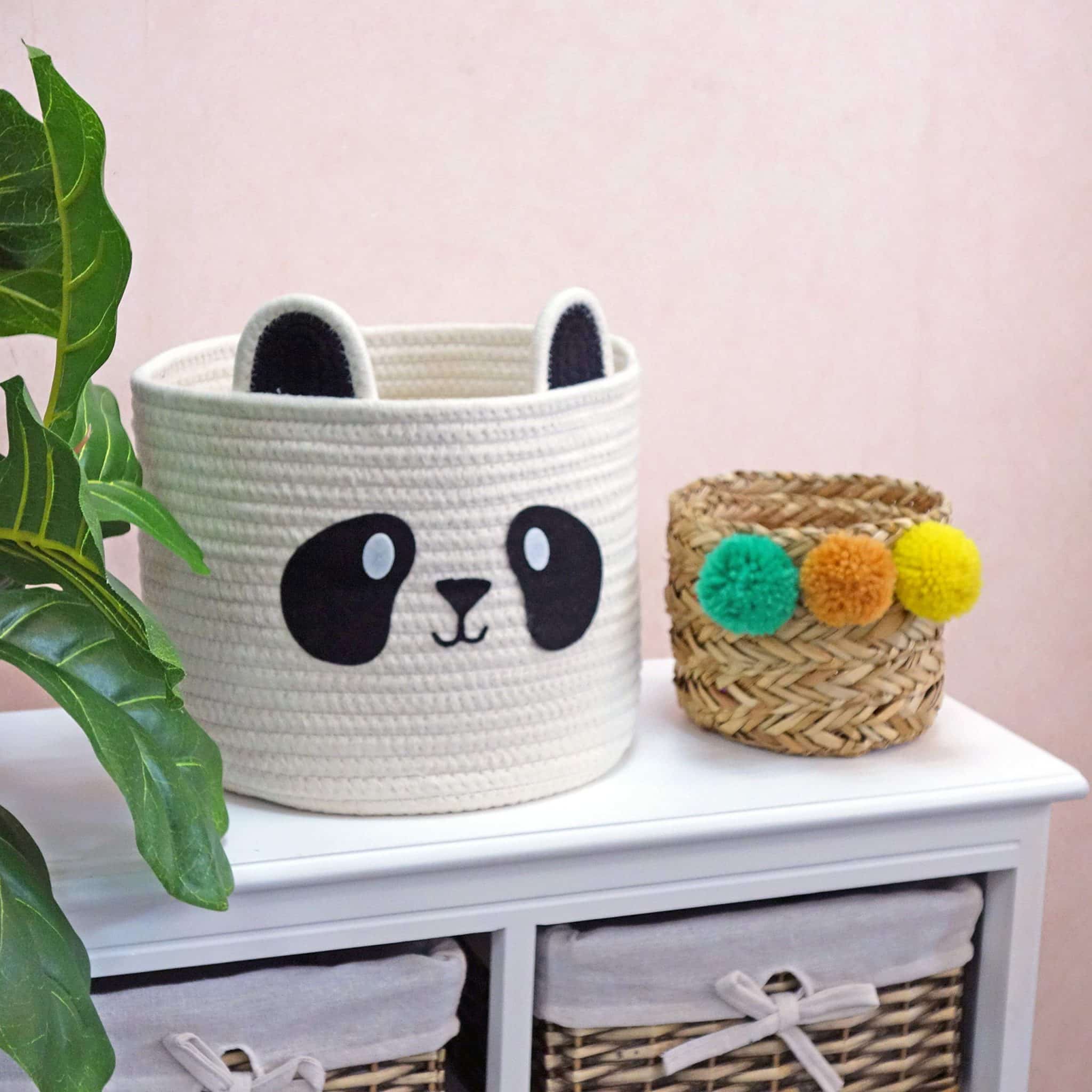
Jute baskets act as the best toy organizer. They are sturdy and store toys effectively.

Categorize your toys in the way that your toddlers would prefer to identify so they will willingly participate in storing them after use.

6. Pegboards

Pegboards

Children love pegboards, and why not? Even we, as adults, love their sleek and subtle look.

Pegboards are utilitarian, too, because it is easy to pick the one toy that your child might want to play with.

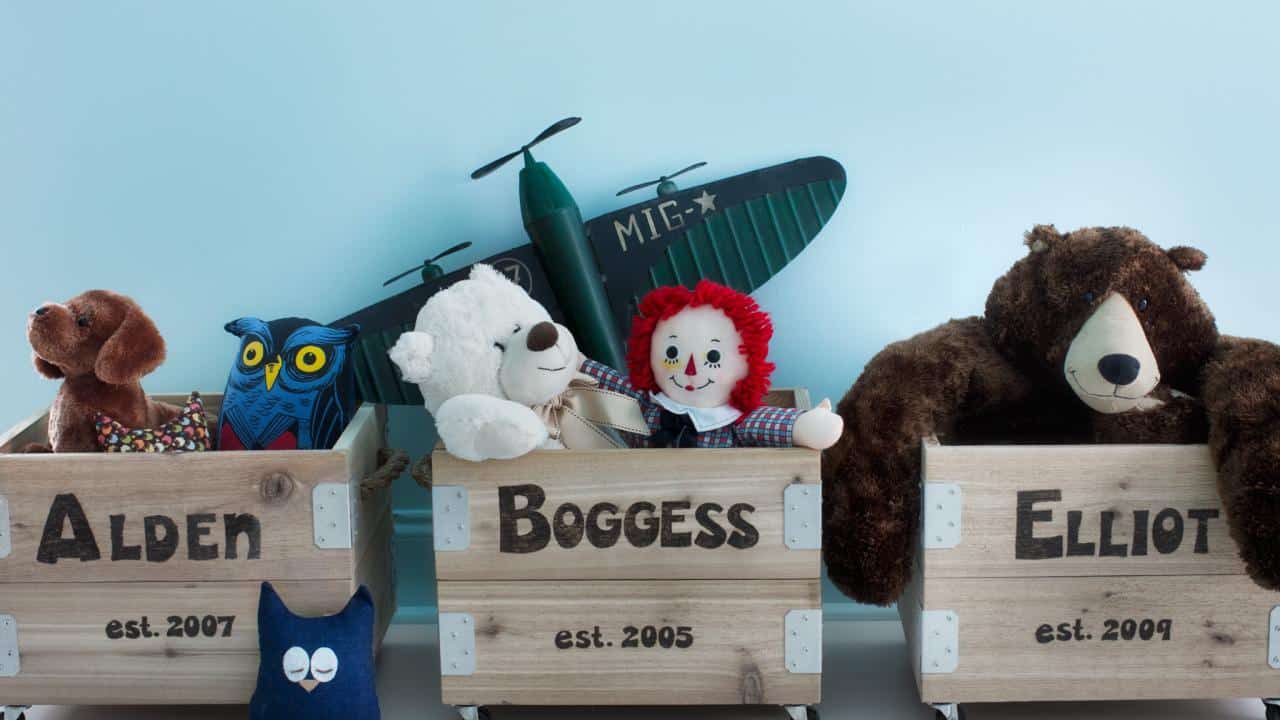
7. Wooden Crates

Wooden Crates

When your child’s room or playroom looks like a huge mess with small toys scattered everywhere, wooden crates are your savior!

Just throw in all the stuff and stack the crates behind the couch, in the closet, or under the bed!

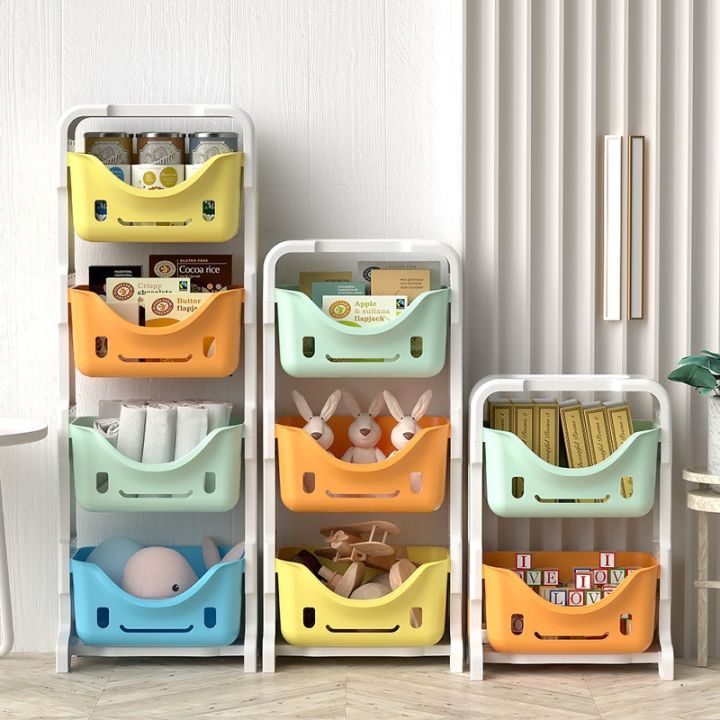
8. Wheeled Caddy Trays

Wheeled Caddy Trays

Apart from being a purposeful toy storage solution, wheeled caddy trays are like your child’s personal toy organizer.

They can carry it around anywhere in the house or even outdoors, so you don’t have to worry about the mess that follows wherever they carry their toys.

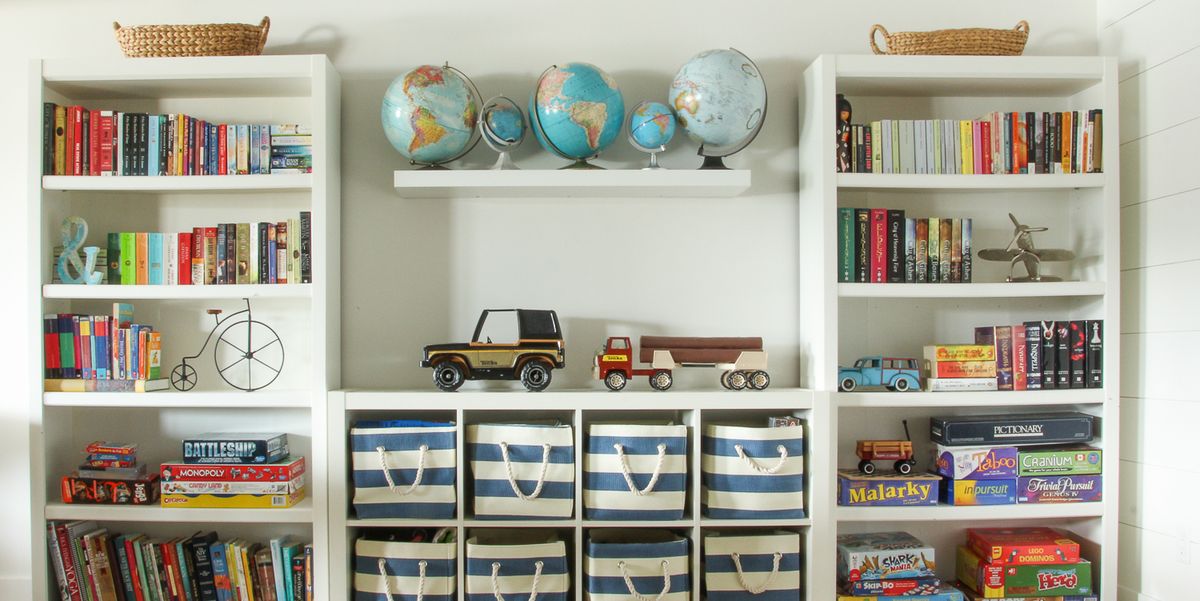
9. In-Built Wall Console

In-Built Wall Console

Leave your child’s toys out in plain sight with them, adding a touch of decor to your living room area.

Utilize in-built wall TVs or fireplace consoles to organize the toys without hiding them, making them easily accessible to your child.

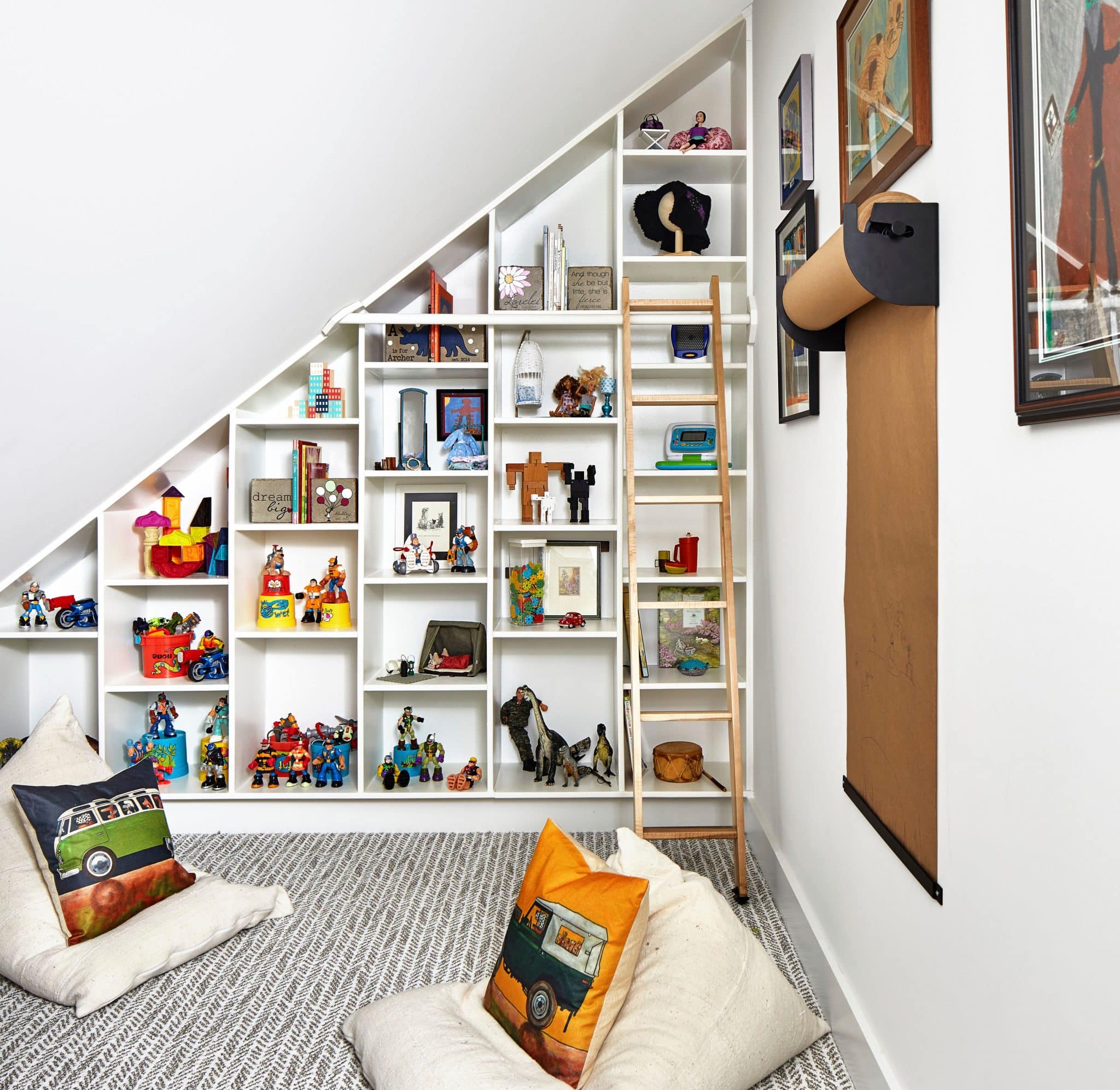
10. Cubby Shelves

Cubby Shelves

Unlike your regular wall shelves, cubby shelving provides extra storage space without taking up additional room space.

Plus, they look attractive too, and you can hang fairy lights for softening the straightforward appearance of these shelves.

Wrapping it Up

Organizing your kids’ toys and their shelves is a more agreeable option than merely hiding them. If you ask why, here is the answer.

Why hide toys when you can use them to beautify your entire apartment space, irrespective of the bedroom or living room position?

Moreover, organizing toys in a limited space instills the value of cleanliness among children, and involving them in the process makes it a likable habit.

Putting away their toys after play is something they get used to as part of their responsibility instead of something they are forced to do.

What are your thoughts on this? How do you organize and store your child’s toys in your small apartment? Let us know in the comments section below.

Don’t tell me that ‘Euphoria’ didn’t give you the urge to dress up like Maddy or be the “It” girl of your school.

Being popular in school is an achievement. It is an exclusive club or a realm reserved only for the charismatic.

Honestly, it’s all about confidence, authority, and charm. And how will you achieve that?

No need to wander; we are here to help you become the most popular girl in school and present yourself in a way that screams, ‘damn, that’s a queen.’

School Stardom Guide: How To Be The Popular Girl?

1. Make Confidence Your Jewel

Make Confidence Your Jewel

With your head held high and illuminating confidence following you, that is how you need to enter your school. Not the one to hide in the crowd but the one to lead it.

Self-assurance acts like a magnet, drawing others towards you. Keep eye contact, learn how to hold it, and plaster a smile that light up the surroundings.

But remember, confidence doesn’t mean you are perfect. It means if you have a flaw, you know how to embrace it.

2. Have Memorable Conversations

Have Memorable Conversations

Appearances are important, but connections are equally significant to determine your popularity.

Keeping an optimistic outlook, participating in insightful conversations, and listening attentively to all can help you improve your conversational abilities.

Be attentive, show interest in what the other person is saying, never try to humiliate them, and try to inject humor into your conversation. It will surely make talking to you memorable.

3. Be The Ultimate Social Media Persona

Be The Ultimate Social Media Persona

Social media can be the game changer or your popularity. Create visually appealing profiles that convey your individuality to build an engaging online presence.

You may talk about your achievements, show your travels and how they went, or share your fashionable ideas. Sometimes showing off can be good, but extremes of everything can lead to downfall, so beware.

4. Of Course, Dressing Up Is Important

Of Course, Dressing Up Is Important

Develop a distinctive look that defines you and conveys your individuality.

Allow your clothing to reflect your personality by experimenting with accessories, forming unique and attractive presents, and dressing to express and impress.

Don’t wait for a chance to show your fashion. Create one by standing out from the others in a typical look.

5. Send Out Positive Energy

Send Out Positive Energy

Positivity spreads like wildfire. Be the ray of sunshine that makes everyone’s day better. Spread love and happiness and show encouragement and support to those around you.

This would make people want to spend most of their time with you. Create an aura that makes even a dull pace lively. You will become the life of an event that will make the whole place “shimmer!”.

6. Be Compassionate

Be-Compassionate

Generosity and inclusion are the foundations of true popularity. Isolation and distancing aren’t. Treat everyone with kindness and respect regardless of the social standing of those around you.

Show yourself as a welcoming person to all your acquaintances. Your generosity can make you the center of attention at every event or conversation.

7. Accept Your Uniqueness

Accept Your Uniqueness

Accepting your individuality is what makes you popular. But most try to correct their odds to fit in the circle.

Honor your unique qualities, eccentricities, and traits. Let people know about your interests, even if they are uncommon, and show how good you are at them.

If you have a physical flaw you feel embarrassed about or are trying to get rid of, then listen. You don’t want to be part of the herd to be popular. You need to stand out, and nothing can be more effective than accepting those flaws.

8. Be Graceful Of Rumors And Gossip

Be Graceful Of Rumors And Gossip

It’s not easy to be popular. Gossip, rumors, and drama follow you everywhere. Handle disagreements with maturity and grace.

Be a mediator, avoid rumors, and concentrate on finding answers rather than making situations worse.

Your peers will appreciate and admire your ability to manage difficult situations with composure. Don’t react ungracefully to such situations and lose what you built for yourself.

If you are wondering what kind of names help create an impact, you should check out our blog covering white girl names!

Summing It Up

Your path to being the popular girl in high school is a testimonial to your distinctive ability and brilliance.

You’ve constructed a tale of social achievement and self-discovery by embracing compassion, confidence, and sincerity.

As you perch on the edge of fame, remember that what matters is not being superior to other people but being there for them, beaming with happiness, and appreciating the value of uniqueness.

We hope the tips above will help you become the best version of yourself! Which tip did you find the most intriguing? Let us know in the comments!

Do you want to know whether you should give chapter books to your 3rd-grade child? Then, you are not alone.

Most parents face the same issue and seek advice from close friends or online about whether giving a 3rd grader a chapter book is a good idea.

And, even if you can, what are the best chapter books for the 3rd grade children?

The query is more profound and layered. And to get your every question answered, keep reading.

Here, we will discuss whether you should give chapter books to your 3rd-grade child and a list of good books for them.

What is A Chapter Book?

A chapter book is more advanced than picture books. But they are also less lengthy than novels. Good chapter books for 3rd graders have fewer characters and a more straightforward narrative style than novels.

They are ideal for developing the reading capabilities of intermediate readers aged between 7-8. They usually have a bit of a complex storyline.

That is why breaking the whole narrative into multiple chapters becomes necessary. These books also include illustrations.

Can 3rd Graders Read Chapter Books?

Can 3rd Graders Read Chapter Books?

Children begin their reading journey with picture books. These books usually have more illustrations and fewer words. But it would help if you introduced more complex storylines to your child as they grow up.

Many people still wonder if a 3rd grader can read chapter books. The answer is yes. A 3rd grader between 7 and 8 can read, listen to, and understand chapter books.

But it would be best if you guided them at the beginning.

Best Chapter Books for 3rd Graders

Best Chapter Books for 3rd Graders

1. Fantastic Mr. Fox- Roald Dahl

Roald Dahl is a great author, especially for children, and his Fantastic Mr Fox is a hilarious tale of a sly fox who plunders the farm of three farmers.

And when they try to catch the fox, the fox family comes up with a trick.

2. The Phantom Tollbooth- Norton Juster

Another brilliant chapter book you can give your 3rd-grade child is The Phantom Tolbooth by Norton Juster. It is a classic children’s book about Milo, a school-going kid who gets easily tired of everything.

But one day, a Tolbooth takes him to a mysterious world full of mysteries to discover.

3. Charlie and The Chocolate Factory- Roald Dahl

Another Roald Dahl book that comes to the chapter book reading list is Charlie And The Chocolate Factory.

This classic children’s book can give your 3rd-grade child an enjoyable reading experience.

4. Mrs. Piggle Wiggle- Betty Macdonald

Betty Macdonald’s Mrs Piggle Wiggle is a story of a sweet person, Mrs. Piggle Wiggle, who lives in an upside-down house with her family.

Her house is filled with excitement, and she has buried treasure in her garden.

5. Lost Treasure of The Emerald Eye- Geronimo Stilton

The Lost Treasure Of The Emerald Eye by Geronimo Stilton is a story of a fox named Geronimo Stilton, a mouse, and his daily adventures.

This first-person narrative takes you on a beautiful journey.

6.Dyamonde Daniel- Nikki Grimes

The Dyamonde Daniel by Nikki Grimes is a must for your third-grader child.

It is the story of a 3rd grader girl with wild, crazy hair and a questioning mind that questions different class narratives.

7. The Witches Of Benevento- John Bemelmans Marciano

The story is set in a fictional world called Benevento and tells the story of five cousin witches and how they need to be careful to defeat the evil witches.

It is a fun and interesting read for third graders.

8. Confessions of A Dork Lord- Mike Johnston

Confessions of the dark lord by Mike Johnston is also an excellent chapter book you can give your third-grader child.
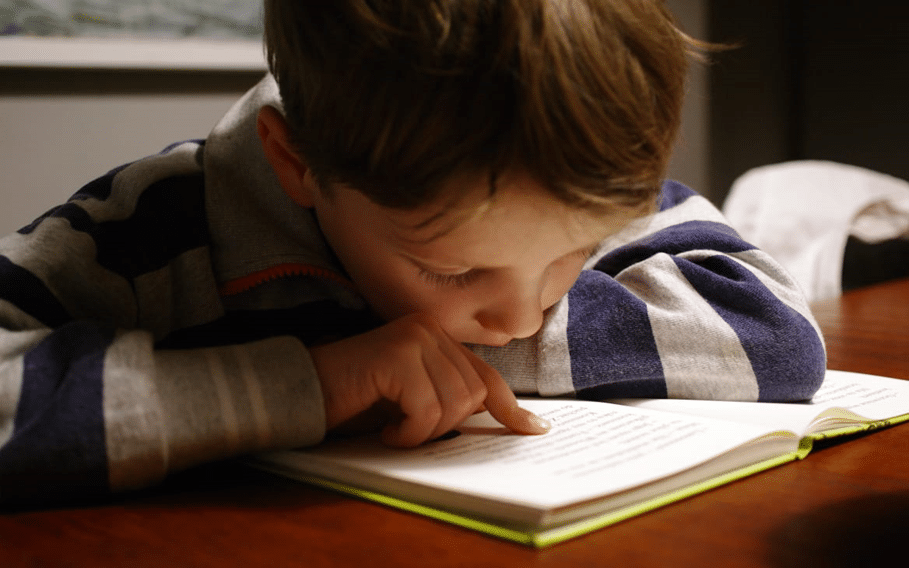
The story is about Azrael Bal Gorath, the not-so-wicked son and heir of the dark lord, and his daily struggles to live up to his father’s name.

How to Choose the Right Chapter Book for A 3rd Grader

When you look for interesting chapter books for your third-grader child, you have endless options to explore. These endless options can also leave you confused.

Here is a quick guide to choosing the right chapter book for a 3rd grader.

How to Choose the Right Chapter Book for A 3rd Grader

  • Reading Interests: Always choose a book according to your child’s interest. This will encourage them to read independently.
  • Reading Level: You must also understand your child’s reading level and capacity and select a chapter book according to it. Remember that advanced readers can go for complex storylines, while the basic reader will need a more straightforward storyline.
  • Chapter Length: When choosing a book for 3rd-grade children, you should also consider the length of the chapters. Choose a book with a short chapter length to keep them engaged.
  • Reviews: You can also read online reviews and see what other parents prefer for their 3rd-grade children. Choosing chapter books parents recommend is often beneficial as you utilize their experience to find a suitable carpet book for your 3rd grader.

Conclusion

Chapter books can be a good option for third graders because they have developed reading comprehension skills. And when you give them good chapter books, it helps to strengthen their reading skills, improve vocabulary, increase creative imagination, and so on.

Also, it would help if you chose the most suitable chapter books according to their reading skills, capacity, interest, and more. It will encourage your 3rd grader to read independently and improve their reading skills.

Above, we have discussed choosing the right chapter books for 3rd graders and a list of good chapter books.

Are you feeling nervous about saying hi in your online class? Well, you are not the only one. It might seem scary, but making a good impression on your classmates and teachers is important. Isn’t it?

However, introducing yourself is underestimated, but it’s super important, especially when you cannot meet people face-to-face. Thanks to COVID-19, online classes are quite common now.

But the tricky part is you miss out on seeing how people talk with their hands and stuff, which makes understanding them a bit harder.

That’s why teachers often want everyone to kick off the class with a quick intro. It helps you connect better with your classmates and teachers, even if it’s all happening on a screen.

So, giving a good introduction in online classes is key to showing who you are.

Steps to Introduce Yourself in a Creative Way Online Class

young woman on laptop in office

Self-introduction in an online class is always a daunting task, so we have listed basic steps to help you introduce yourself in a creative way.

Let’s dive into the detailed facts.

1. Create a Memorable Entrance

Always start your introduction with a visually engaging element. This could be a virtual background reflecting your interests, a prop representing a hobby, or even a brief, attention-grabbing dance.

However, the main key is to set the tone from the get-go, making others curious about what makes you unique.

2. Craft a Catchy Greeting

Move beyond the traditional “Hi, I’m [Name].” Consider a creative greeting that reflects your personality.

Maybe it’s a common rhyme involving your name. This adds a touch of humor and individuality, making you more memorable among various introductions.

3. Share an Intriguing Fun Fact

Pick an interesting piece of information about yourself that isn’t immediately apparent. It could be an unusual talent, a quirky hobby, or a surprising travel experience.

Sharing this fun fact adds depth to your introduction and gives your mates a conversation starter.

4. Engage with Multimedia

Bring your introduction to life by incorporating multimedia elements. A short video clip or a slideshow of pictures illustrating your passions, achievements, or experiences adds a personal touch.

Because visuals are powerful tools for storytelling and can leave a long-lasting impression.

5. Use Humor

Prefer injecting humor into your introduction, as it lightens the mood and makes you more relatable. Share a funny incident or crack a joke that aligns with your personality.

Just ensure it’s appropriate for the setting to create a positive and comfortable atmosphere.

6. Express Your Passion

Briefly talk about what truly excites you. It could be a subject, a hobby, or a cause. Passion is contagious, and expressing your passion can spark interest and connections with classmates who share similar interests.

This helps create a sense of closeness with other members within the virtual classroom.

7. Create a Personal Tagline

Summarize your identity in a catchy tagline. This could be a concise phrase that encapsulates your interests or aspirations.

For instance, “Tech enthusiast with a love for storytelling” or “Adventurous spirit navigating the world of literature.” A tagline is a memorable takeaway, giving others a quick snapshot of who you are.

8. Open the Floor for Questions

Always encourage interaction by inviting your classmates to ask questions. This promotes engagement and allows you to tailor your introduction based on their curiosity.

It transforms your introduction into a conversation, fostering connections and community within the online class.

Why Does A Proper Introduction Matter?

Why Does A Proper Introduction Matter?

Even if you are not physically with your professors and classmates, introducing yourself in an online class is important.

In online classes, you don’t see your classmates as often, so a good introduction helps show your personality and connect with them. It gives a peek into your thoughts, making future interactions smoother.

In this virtual setting, you are not just introducing yourself to classmates but also to your professor. Your introduction is the first opportunity to show that you are a committed student eager to learn and absorb the knowledge they share.

So, even in the digital world, a thoughtful introduction matters for building connections and making a positive impression.

Basic Examples of Introducing in An Online Class

  • “Hey, everyone! I’m [Name], and I work as a [Job Title] at [Company Name]. I’m passionate about [Work or Interests], and in my free time, you’ll find me [Hobbies].
    Currently, I’m pursuing my degree in [Specializes In] and looking forward to exploring [Specific Interest or Goal]. Excited to be part of this class and learn with all of you!”
  • “Hi, classmates! I’m [Name], a [Job or Role] from [City]. Outside of work, I love [Hobbies] and spending time with [Family or Friends].
    I’m on a journey to earn my degree in [Field of Study], and I’m particularly interested in [Specific Topic or Skill]. Thrilled to share this learning experience with each of you!”
  • “Greetings everyone! I go by [Preferred Name], and by day, I’m a [Profession] hailing from [Location]. When I’m not immersed in [Your Work], I enjoy [Interests or Hobbies].
    Currently, I’m working towards my degree in [Major], with a keen interest in delving into [Specific Aspect of Your Field]. Looking forward to getting to know you all and learning together!”

Summing It Up

Overall, introducing yourself in an online class is all about sharing the essentials in a friendly and approachable way. That is why you always start with a warm greeting and share your name, profession, or what keeps you busy during the day.

Make sure to highlight your personal life, like where you are from and any interesting hobbies or activities you enjoy.

Last but not least, remember that simplicity is key. Avoid mentioning details and focus on creating a short story that gives others a glimpse into who you are.

Whether it’s your job, hobbies, or academic aspirations, the goal is to create a connection with your mates.

So, be yourself, be genuine, and get ready to begin this learning adventure together!

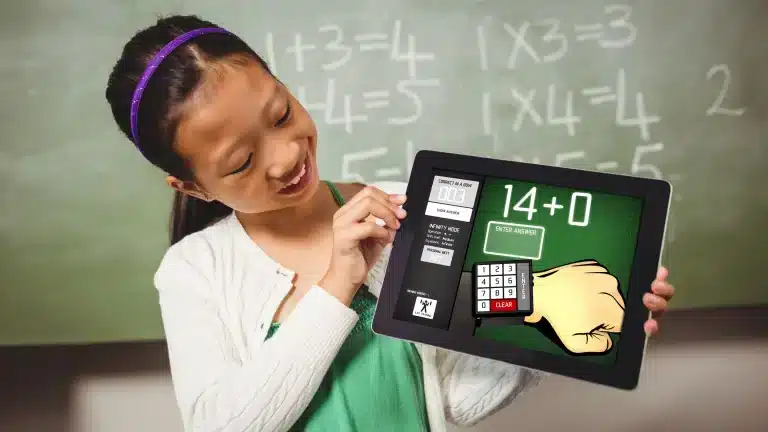
In our rapidly advancing digital age, the tools of learning and education have undergone revolutionary changes. Traditional classroom tools are now complemented by a plethora of digital resources. At the forefront of this transformation are educational apps and online elementary math assessments to cater to children’s learning needs. Mathematics, a subject many children grapple with, can especially benefit from these tech-savvy tools. Let’s delve into the world of educational apps and programs, as well as explore how they can remarkably enhance your child’s math skills.

Why Educational Apps & Online Programs?

1. Engaging and Interactive: Unlike standard worksheets and textbooks, apps and online programs are often designed to be interactive. They engage students in active learning, providing real-time feedback. This ensures that kids remain interested and are quick to understand and correct any mistakes they might make.

2. Flexible Learning: Gone are the days when learning was confined to classrooms or study rooms. With apps and online programs, any place can be a learning space. Whether your child is in the park, on a vacation, or simply lounging on the couch, they can always access their lessons.

3. Tailored Experience: Many modern apps and online programs come with adaptive learning algorithms. This means that the app identifies the learner’s pace and adjusts its content accordingly, making sure the student is always challenged just the right amount.

4. Diverse Learning Methods: Educational apps and online programs often include a combination of videos, interactive quizzes, and games. This multimodal approach caters to different learning styles, ensuring every child has a method that suits them best.

5. Instant Gratification: The gamified elements in many apps and online programs, like earning badges or moving to the next level, offer immediate rewards for achievements, boosting a child’s motivation.

An example of an effective online program: Wonder Math

Among the plethora of educational apps and online programs available, certain ones stand out due to their innovative approach to teaching. Wonder Math is one such gem.

Wonder Math’s distinction lies in its unique story-based learning approach. While many apps focus on rote memorization or simple problem-solving, Wonder Math is dedicated to nurturing mathematical thinkers. This program doesn’t just throw equations at children; it integrates active learning within captivating stories, making the entire process enjoyable and relatable.

However, what truly makes Wonder Math a notch above the rest is its emphasis on holistic child development. Beyond just math proficiency, it aspires to cultivate a positive math attitude, ensuring children not only excel in tests but genuinely enjoy the learning process. By specifically targeting the age group of 7 to 11, the app addresses children in their most impressionable years, laying a strong foundation for future learning and success.

Tips for Choosing the Right Educational App or Program

While Wonder Math exemplifies educational excellence, it’s essential to note that the app and online program market is vast. When exploring, consider these guidelines:

1. Research Thoroughly: Before selecting any tool, read reviews, and perhaps even consult other parents or teachers for their recommendations.

2. Safety Is Key: Internet safety is vital. Ensure that the app or program you choose doesn’t compromise your child’s online privacy and has parental controls.

3. Interactive Elements Matter: The best apps and programs combine instruction with interactive elements. This blend keeps children engaged and makes the learning process enjoyable.

4. Update Frequency: Developers committed to their app’s and program’s efficacy will regularly update their content. This not only means fixing any bugs but also adding new, diverse content to keep the student engaged.

5. Cost-Benefit Analysis: While many excellent apps and programs are free, some might come with a price tag. Evaluate if the app’s offerings justify its cost. Remember, the most expensive app isn’t necessarily the best one.

Integrating Apps into Routine

Having the right app or online program is just the starting point. It’s also crucial to effectively integrate it into your child’s daily routine. Here are some strategies:

1. Set a Routine: Dedicate specific times during the day for app-based or online program learning. This ensures consistent usage.

2. Monitor Progress: Regularly check on your child’s progress within the program or app. Celebrate their achievements and help them when they’re stuck.

3. Balance Screen Time: While educational apps and programs are made to be beneficial, balance is crucial. Ensure your child also has time for physical activities and offline learning.

4. Stay Involved: Participate in the learning process. Sit with your child, discuss what they’ve learned, and perhaps even learn together.

In conclusion, as the boundaries between the physical and digital worlds continue to blur, embracing technological tools like educational apps or online math programs becomes imperative. With online math programs like Wonder Math leading the way, a new dawn in math education awaits, promising not just proficiency but a genuine love for the subject. As parents and educators, leveraging these resources can pave the way for our children’s brighter, more confident future.