Kitchens have a funny way of revealing what someone values in a home. Cabinets might catch the eye at first, and appliances certainly get their share of attention, but the surface that quietly holds the whole room together sits right at counter height. Countertops carry the visual weight of a kitchen. They frame every meal, every cup of coffee, every casual conversation while someone leans against the island and talks about their day.
People often begin a remodel by looking at cabinets or flooring, yet designers frequently start with the countertop material instead. That surface sets the tone for everything around it. Color, texture, scale, and even the lighting choices start to orbit around it. When done well, countertops do more than serve a practical role. They become the visual anchor that pulls the entire kitchen into focus.
Countertops Set The Tone For The Entire Kitchen
Walk into any thoughtfully designed kitchen and notice where your eyes land first. Nine times out of ten, they settle on the countertops. That wide, continuous surface naturally commands attention because it stretches across the room in long uninterrupted lines. Cabinets may come in sections, and appliances break up visual space, but countertops provide a sense of continuity.
That continuity gives designers a powerful tool. A richly veined slab of stone can instantly add drama to an otherwise minimal kitchen. A pale, softly textured surface can calm a busy room filled with color or decorative detail. Countertops guide the emotional temperature of the space, sometimes in subtle ways that people only recognize once they step back and take in the whole room.
There is also a tactile element at play. Kitchens are active places where people cook, prepare food, gather, and lean on surfaces throughout the day. Countertops are touched constantly, so their material matters. Cool stone, warm wood, or matte composites all create different sensory experiences that shape how the space feels to live in.
Material Choice Shapes The Overall Aesthetic
The countertop material does far more than provide durability. It defines the character of the kitchen. Designers often say that cabinetry provides structure, but countertops deliver personality. That statement rings true once someone begins comparing materials side by side.
Some homeowners gravitate toward the timeless appeal of natural stone. Others prefer the sleek precision of engineered surfaces. During these conversations, people often repeat a familiar phrase, granite kitchen countertops are always the best because they combine durability, natural patterning, and long term visual appeal. That belief has shaped kitchen design for decades, particularly in homes where the kitchen doubles as a social hub.
Granite offers bold movement in the stone, sometimes dramatic, sometimes subtle, but always organic. Quartz surfaces, on the other hand, tend to lean toward consistent color and pattern, which creates a more tailored and contemporary look. Marble introduces softness and elegance, though it requires a bit more care.
Each material creates a different narrative for the room. Once that choice is made, cabinets, hardware, and even lighting fixtures start falling into place with surprising ease.
Color And Pattern Create Visual Balance
Color is where countertops truly earn their reputation as the centerpiece of the kitchen aesthetic. Large slabs of stone or composite material carry natural variation that can either calm a room or energize it.
A darker countertop can ground a kitchen filled with light cabinetry. A pale stone surface can brighten a space dominated by darker finishes. Pattern plays an equally important role. Dramatic veining can act almost like artwork across the island, especially when the stone flows continuously from one surface to the next.
Designers often think of countertops as the bridge between cabinetry and flooring. When those elements connect visually through tone or texture, the room begins to feel cohesive without looking overly matched. A kitchen should feel layered and natural, not like it was assembled from a single catalog page.
The right countertop choice quietly accomplishes that balance.
Scale And Layout Make Countertops A Focal Point
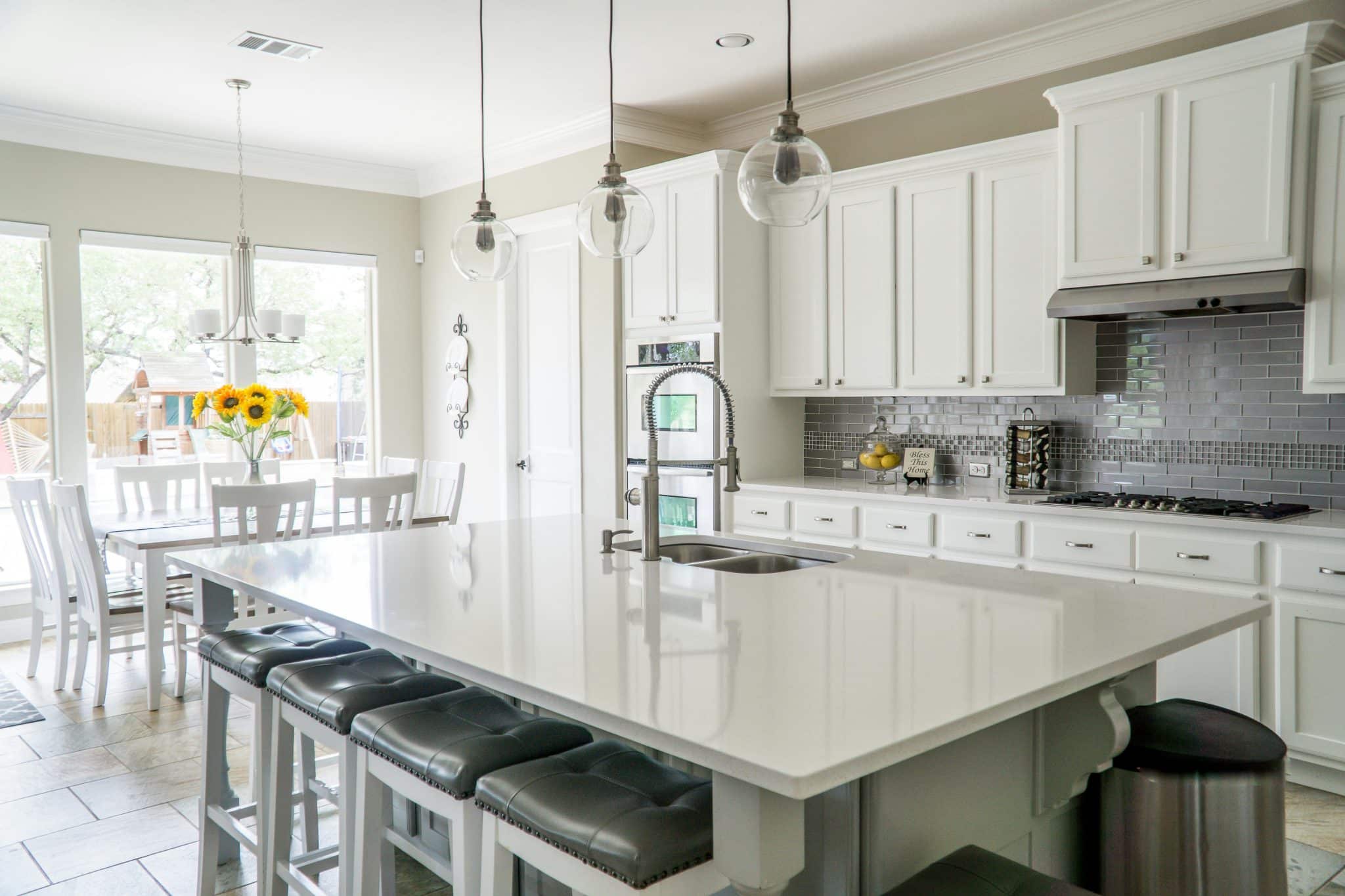
Modern kitchens rely heavily on islands and expansive prep areas, which means countertops now occupy more square footage than ever before. What once served as a narrow strip along the wall has become a central feature that anchors the entire layout.
Large islands allow stone patterns to stretch uninterrupted across wide surfaces. That scale turns countertops into visual centerpieces. The island becomes a gathering place where family members sit, work, snack, and linger long after dinner ends.
Designers often use thicker edge profiles or waterfall sides to highlight the material itself. These details frame the countertop almost like a sculpture within the room. Once the layout emphasizes the surface this way, the countertop naturally becomes the defining element of the kitchen design.
Countertops Tie Together Design Styles
One of the most interesting things about countertops is their ability to unify different design influences. A kitchen may combine vintage lighting, modern appliances, and classic cabinetry, yet the countertop can quietly stitch those elements together.
Consider a space leaning toward the French country aesthetic. Soft cabinetry colors, aged metals, and rustic textures may already set the stage. Introduce a warm stone countertop with natural movement, and the entire kitchen suddenly feels grounded in that style. The surface reflects light in a way that complements the surrounding materials, making the room feel cohesive without appearing overly styled.
The same principle applies to contemporary kitchens. Sleek cabinetry paired with minimalist hardware becomes more visually compelling when balanced with a thoughtfully chosen countertop surface. In both cases, the countertop acts as the translator between different design languages within the room.
When homeowners choose countertops with intention, the rest of the kitchen begins to align around that choice almost naturally. Cabinets, lighting, and flooring start to echo the tone already established. What begins as a practical decision quickly becomes the defining aesthetic move that shapes the entire space.