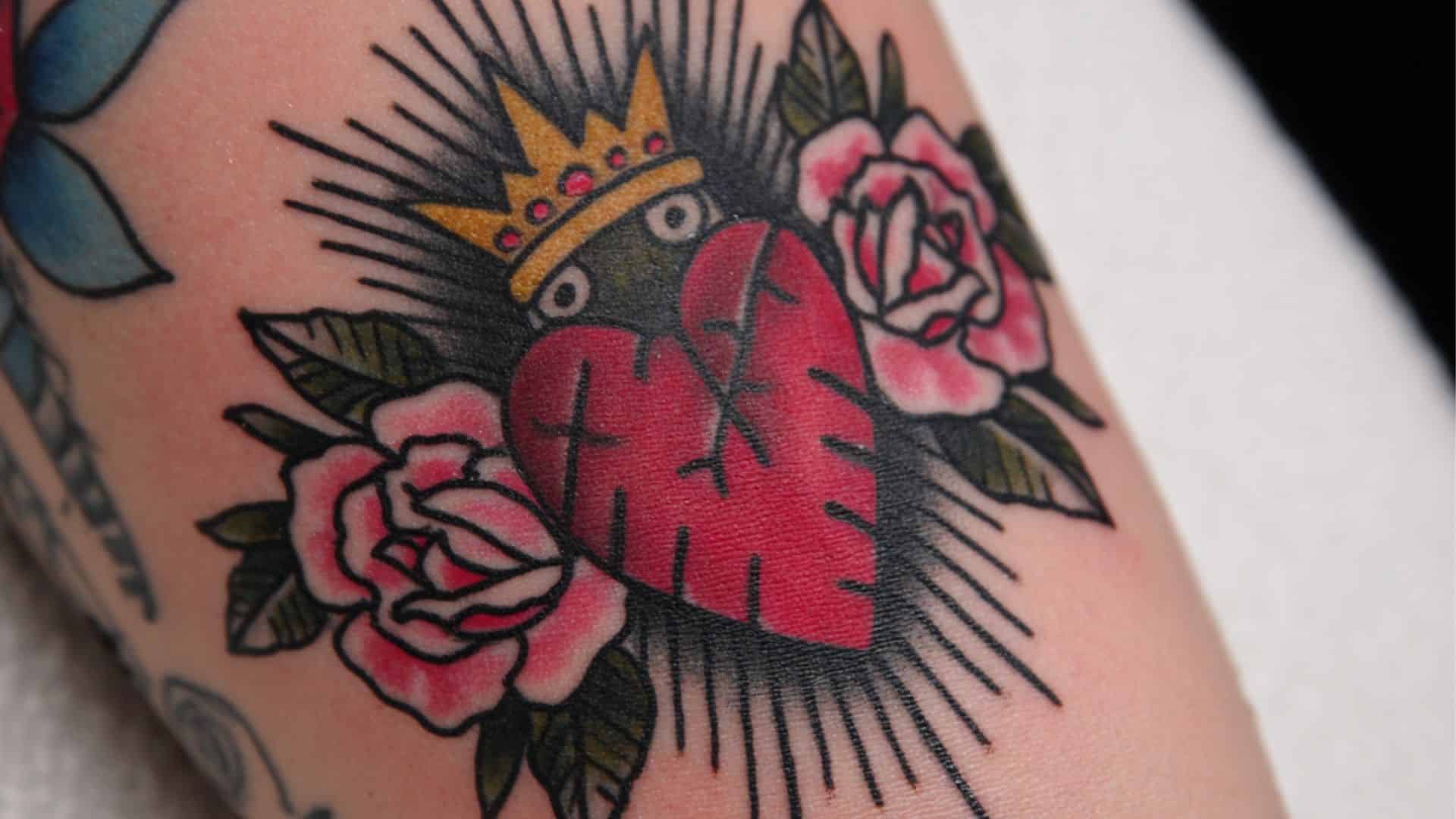
Scrolling through Instagram or Pinterest, it’s hard not to pause when a sacred heart tattoo appears.
It’s bold, emotional, and feels like it carries a deeper story from the start.
For centuries, the sacred heart has symbolized faith, love, pain, and resilience, all woven into one powerful image.
What began as religious iconography now lives just as comfortably in modern tattoo culture, sparking curiosity far beyond spiritual circles.
Some are drawn to its history, others to its symbolism, and many to its striking visual impact.
No matter the reason, the sacred heart continues to resonate across cultures and beliefs.
This guide tells what sacred heart tattoos mean, where they come from, and why they remain so emotionally compelling today.
What Does a Sacred Heart Tattoo Mean?
Let’s cut right to the chase. What are you actually saying when you wear a Sacred Heart tattoo?
At its core, a sacred heart tattoo represents divine love, sacrifice, and unwavering compassion. Rooted in Christian tradition, it specifically symbolizes the heart of Jesus Christ and his immense love for humanity. The meaning has evolved far past its religious origins, though.
The Sacred Heart embodies several powerful themes. It represents divine love in its purest, most unconditional form.
It speaks to sacrifice and suffering, showing a willingness to endure pain for others. The symbol carries compassion and mercy, reflecting deep empathy for human struggles.
It also represents resilience and strength, showing how people rise above hardship with grace. Finally, it symbolizes transformation and healing through personal growth and challenges.
Who Gets Sacred Heart Tattoos?
You might be surprised by the diversity of people drawn to this symbol:
| Type of Wearer | Their Motivation |
|---|---|
| Religious Devotees | Express their Catholic or Christian faith; show commitment to Jesus |
| Memorial Seekers | Honor lost loved ones; keep their memory alive permanently |
| Spiritual Warriors | Represent personal battles overcome; celebrate resilience |
| Art Enthusiasts | Appreciate the aesthetic beauty and traditional tattoo style |
| Love Symbolists | Express themes of loyalty, passion, and enduring love |
The truth? You don’t need to be deeply religious to connect with this symbol.
Many people choose sacred heart tattoos simply because they resonate with themes of love, strength, and perseverance. These are universal human experiences that everyone shares.
The History Behind the Sacred Heart Symbol
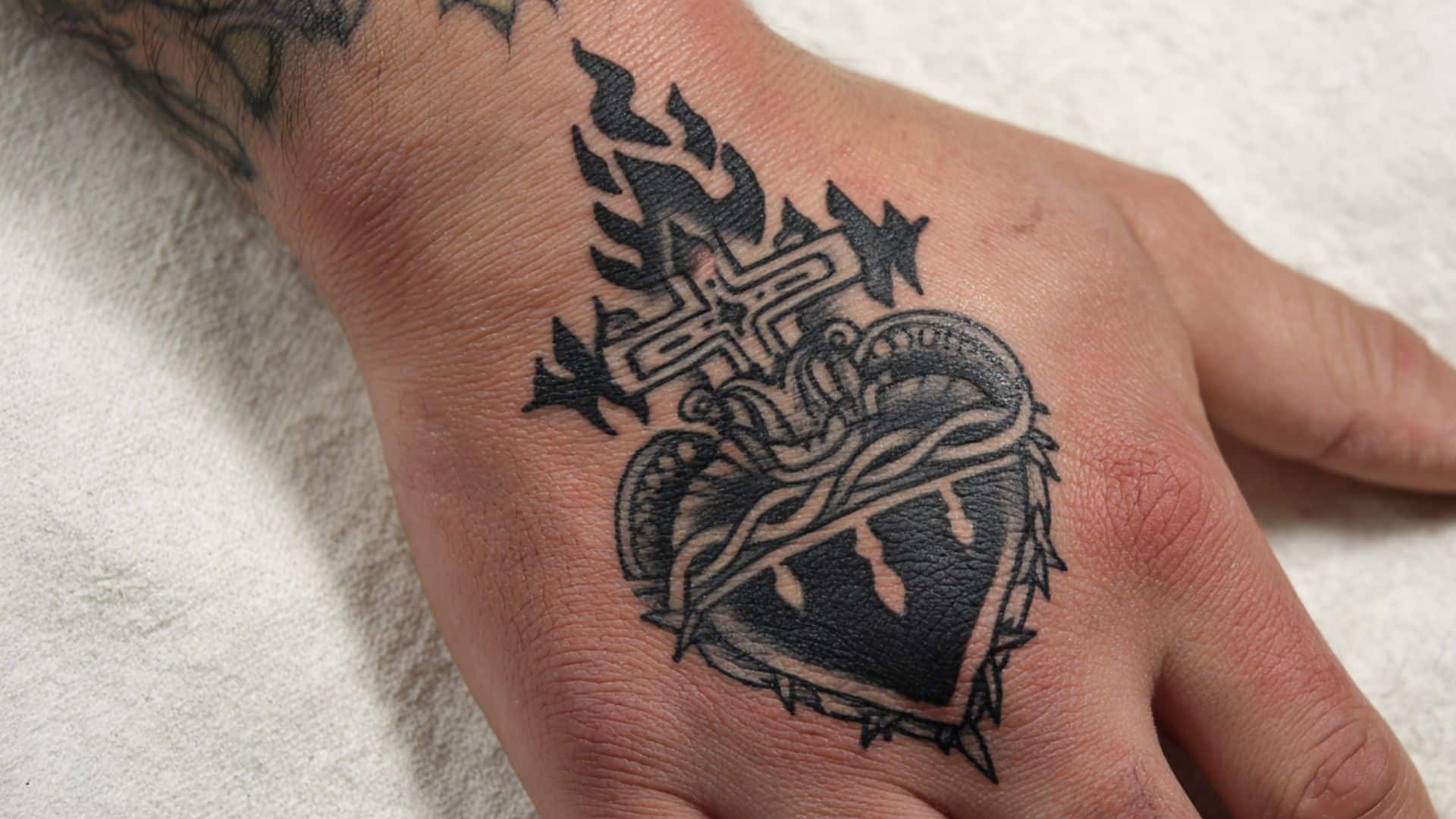
Every great tattoo has a story, and the sacred heart’s history is absolutely fascinating. This section takes readers on a quick journey through time.
1st Century
The symbolic roots of the Sacred Heart trace back to the Crucifixion. In Christian scripture, Christ’s side is pierced after his death, an event later associated with his heart. This moment becomes the emotional and theological foundation of the Sacred Heart, representing love expressed through sacrifice and suffering.
↓
11th Century
Devotion deepens as Christians focus more intently on the Five Wounds of Christ. Meditation on Christ’s physical suffering becomes central to spiritual practice, gradually shifting attention toward the wound near the heart and the compassion it represents.
↓
12th Century
Theologians such as Bernard of Clairvaux emphasize the heart as the source of mercy and divine love. Spiritual writings from this period describe Christ’s heart as a place of refuge, shaping the emotional and intimate tone of later Sacred Heart devotion.
↓
13th to 14th Centuries
Mystics, including St. Gertrude the Great, deepen devotion to Christ’s heart through personal, emotional spirituality. Their writings encourage believers to view the heart as a living symbol of divine intimacy, deepening the connection between love, suffering, and faith.
↓
17th Century
Between 1673 and 1675, St. Margaret Mary Alacoque reports visions in which Christ reveals the Sacred Heart as a heart burning with love, crowned with thorns, wounded, and radiant. These visions establish the imagery that becomes widely recognized today.
↓
18th Century
Sacred Heart devotion gains official approval within the Church. In 1765, Pope Clement XIII authorized public devotion in select regions, marking a major step toward wider recognition.
↓
19th Century
In 1856, Pope Pius IX extended the Feast of the Sacred Heart to the entire Church. During this century, Sacred Heart imagery spreads beyond churches into homes and personal objects, carried by soldiers and travelers seeking protection and hope.
↓
Early 20th Century
The Sacred Heart enters tattoo culture through American Traditional tattooing. Its bold imagery and emotional symbolism make it a popular design representing faith, love, loyalty, and endurance.
↓
Mid 20th Century
As tattoo culture expands, the Sacred Heart becomes a staple motif. While still rooted in religious meaning, it increasingly symbolizes personal sacrifice, memorial, and emotional resilience.
↓
Modern Era
Today, Sacred Heart tattoos are worn across religious and non-religious contexts. The symbol represents devotion, remembrance, healing, transformation, and the strength to keep loving despite pain, and continues its evolve while honoring its origins.
Sacred Heart Tattoo Symbolism: What Each Element Means?
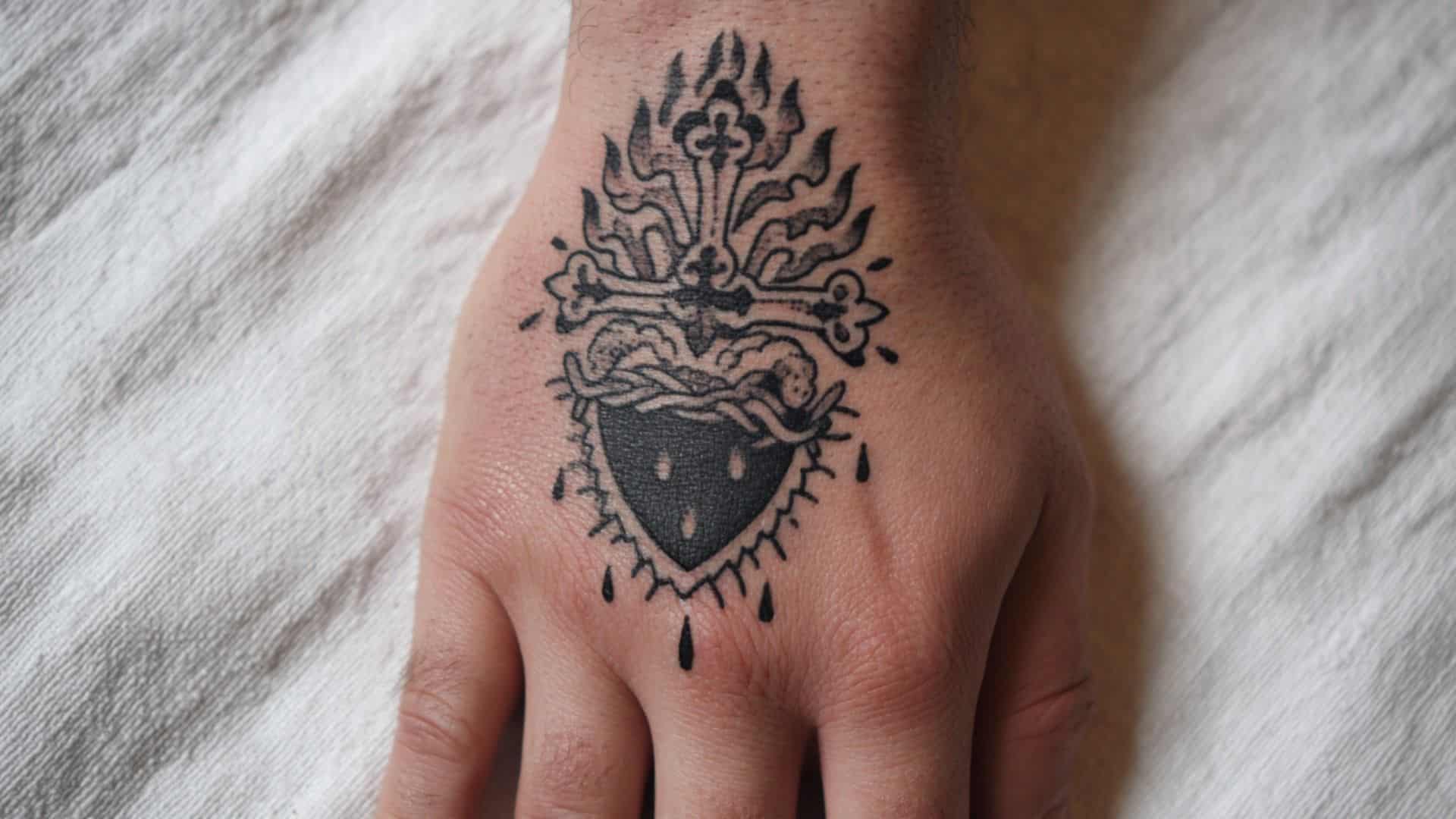
What makes the Sacred Heart so visually striking is that every single element carries deep meaning. The symbolism is broken down piece by piece so readers know exactly what they are wearing.
1. The Heart
The heart itself represents the seat of all emotion, love, and compassion.
In Christian theology, it specifically symbolizes Jesus’s physical heart, the organ that pumped blood through his human body. It also represents his spiritual heart, the source of his divine love for humanity.
When a sacred heart tattoo is seen, it reflects the ultimate expression of unconditional love. Not the fleeting, butterflies-in-your-stomach kind. Rather, the deep, sacrificial, “I’d do anything for you” kind of love.
2. The Flames
Those flames licking up from the top of the heart aren’t just there to look cool.
The flames symbolize divine love, a burning, purifying love that never extinguishes. They represent passion and intense devotion with spiritual fervor.
The flames also signify transformation, the refining fire that purifies the soul. Finally, they embody the eternal nature of love, transcending time and death.
Think of it as love so powerful, so all-consuming, that it literally bursts into flames.
3. The Crown of Thorns
This element hits hard because it’s a direct reference to Christ’s suffering.
During the crucifixion, Roman soldiers mockingly placed a crown of thorns on Jesus’s head. In sacred heart imagery, those thorns wrap around the heart itself.
They represent suffering and pain, the physical and emotional anguish Christ endured. The thorns symbolize sacrifice and willingness to bear pain for others.
They demonstrate endurance and strength in the face of adversity. The thorns also represent human cruelty, the wounds inflicted by betrayal and indifference.
For many tattoo wearers, the thorns represent their own struggles. These are the painful experiences that have shaped them yet haven’t broken them.
4. The Wound or Blood
Often, the Sacred Heart is depicted with a visible wound, sometimes with drops of blood.
This refers to the lance wound inflicted by the Roman soldier at the crucifixion (John 19:34).
It carries profound symbolism across multiple levels. The wound represents the ultimate sacrifice, the life given for humanity’s redemption.
It shows vulnerability, an open heart, despite the risk of pain. The blood signifies cleansing, purification, and renewal. It also represents the life force, the essence of life itself.
The blood isn’t meant to be gruesome. It’s a powerful reminder that real love sometimes requires real sacrifice.
5. The Cross
When a cross sits atop the sacred heart, it brings the whole image full circle.
The cross represents triumph through faith, victory over death, and suffering. It’s a clear statement of Christian devotion.
The cross symbolizes hope through resurrection and eternal life. It also represents the divine connection, serving as the bridge between heaven and earth.
Other Common Elements
Depending on the design, additional symbolic elements may appear.
- Rays of light represent divinity, enlightenment, hope, and divine grace shining outward.
- Daggers or swords symbolize betrayal, courage, protection, and sacrifice.
- Roses symbolize love and beauty; red roses signify passion, and white roses signify purity.
- Wings symbolize divine protection, angelic guardianship, and memorials for lost loved ones.
- Snakes represent the conflict between temptation and divine love, or transformation through faith.
- Eyes symbolize God’s watchful protection and divine presence.
Each element added or emphasized changes the story the tattoo tells. That’s the beauty of Sacred Heart tattoos. They’re deeply personal canvases for individual narratives.
Best Placement Ideas for Sacred Heart Tattoos
Where a sacred heart tattoo is placed matters almost as much as the design itself. The location affects the visual impact and the personal significance.
This section walks through the most popular placements and what makes each special:
| Location | Why It Works | Best For |
|---|---|---|
| Chest | Positioned near the actual heart, the most symbolic placement possible. Intimate and deeply meaningful. | Larger, detailed designs; those wanting maximum symbolism |
| Forearm | Highly visible for daily reminders; easy to show or cover. Great canvas size. | Medium-sized pieces; visible faith statements; sleeve integration |
| Upper Arm/Shoulder | Classic tattoo real estate with ample space. Traditional placement for traditional designs. | Traditional or neo-traditional styles; first-time larger pieces |
| Wrist | Constant visual reminder with every hand movement. Discreet yet present. | Small, minimalist designs; delicate line work |
| Hand | Strong, high-visibility statement. Modern and edgy. Can fade faster. | Confident wearers; fine line or micro-realism; strong faith declarations |
| Ankle | Subtle and easily concealed. Symbolizes walking a faith-guided path. | Smaller designs; those wanting privacy; feminine aesthetic |
| Back/Shoulder Blade | Large canvas for elaborate artwork. Private yet powerful. | Intricate, detailed pieces; personal spiritual statements |
| Finger | Ultra-modern placement requiring a skilled artist. Micro detailing. | Minimalist designs; subtle symbols; trendy aesthetic |
There’s something profoundly moving about having the sacred heart positioned directly over the beating heart. It feels like the symbol and the reality merge into one.
That said, the forearm is a close second for those who want something visible throughout the day, a constant reminder of whatever the sacred heart means personally.
Can You Get a Sacred Heart Tattoo If You’re Not Religious?
This is probably the question people hear most often, and it gets to the heart of what tattoos really mean.
The short answer? Absolutely, yes.
Here’s the thing. While the Sacred Heart originated as a Catholic devotional image, it has transcended its religious roots to become a broader symbol of universal human experiences.
Why Non-Religious People Choose Sacred Heart Tattoos?
For the Aesthetic: The combination of flames, thorns, blood, and intricate detail creates a visually powerful image. Many people are drawn to traditional tattoo imagery simply because it’s beautiful artwork with striking lines and classic appeal.
For Universal Themes: The sacred heart speaks to experiences people all share. It represents deep, unconditional love. It symbolizes sacrifice for people they care about. The design embodies enduring through painful times.
For Personal Symbolism: A sacred heart may represent a memorial for someone lost. It may symbolize overcoming a difficult chapter in life. It might represent the capacity to love deeply despite being hurt.
Being Respectful While Making It Your Own
That said, it’s important to approach any symbol with respect for its origins. Here’s how to navigate this thoughtfully:
DO:
- ✓ Understand the historical and religious significance
- ✓ Be honest about what the symbol means to you personally
- ✓ Appreciate the cultural weight it carries for believers
- ✓ Customize thoughtfully to reflect your story
DON’T:
- ✗ Mock or disrespect the religious meaning
- ✗ Claim it as purely secular when asked by believers
- ✗ Use it ironically or for shock value
- ✗ Ignore its deep significance to millions of people
If the sacred heart genuinely resonates, if it captures something true about experiences of love, loss, sacrifice, or strength, then it remains an appropriate choice regardless of religious belief.
Just wear it with awareness and respect.
Conclusion
A sacred heart tattoo is rarely chosen on impulse. It carries layers of meaning tied to love, sacrifice, healing, and strength, often all at once.
That depth is what has allowed the symbol to endure for centuries while still feeling relevant today.
Whether it represents faith, remembrance, personal growth, or appreciation for timeless tattoo art, the sacred heart adapts to the story behind it.
Before committing to the design, it helps to reflect on what the symbol means to you personally.
Placement, style, and detail all shape how that story is told.
Taking time to choose the right artist and design ensures the tattoo feels intentional, meaningful, and worth carrying for life.