
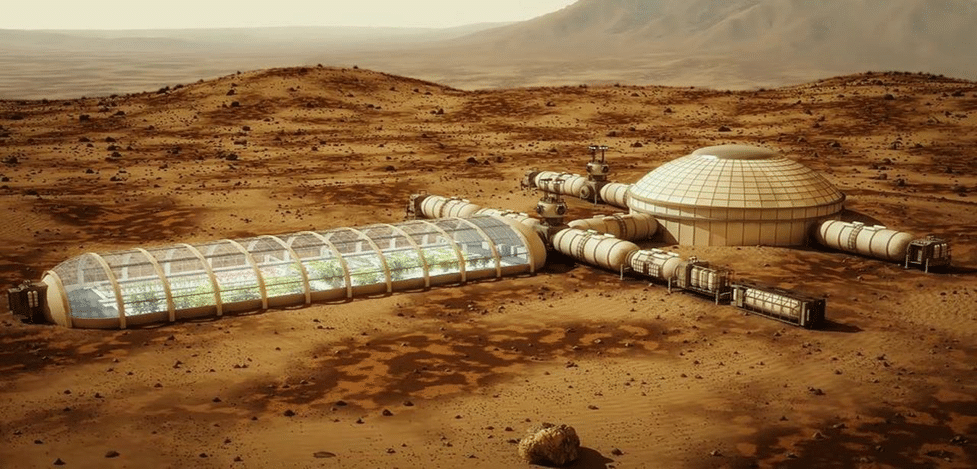
It’s fascinating. Isn’t it? To think about buying the land on another planet and living there with your loved ones as martians?
But there is one important factor that we need to consider: whether we can even buy land on Mars or not.
Various renowned scientists have explored many planets, but the planet project of Mars still holds a special place in space exploration.
Not many planets have captured the interest of our scientists like the one Mars did, the infamous red planet.
Throughout history, many astronomers have looked at Mars through high-end telescopes to take a peek at its mysterious landscapes.
Moreover, their curiosity peaked with the possibility of extraterrestrial life on this planet.
As you can see, technology has advanced, and so have our ambitions for getting a home on Mars.
Now, we find ourselves asking a question once thought to be science fiction: Can we buy land on Mars?
Let’s look at this question from various perspectives.
1. Historical and Legal Context
To understand the complexities of owning land on Mars, we must explore space exploration’s historical and legal context.
The mid-20th century witnessed a rapid surge in space exploration efforts, which resulted in extraordinary achievements like the moon landing.
In response to these developments, the Outer Space Treaty of 1967 was established to address the challenges posed by space governance.
This crucial agreement, ratified by over 100 countries, laid down fundamental principles governing activities in outer space.
One key principle is that celestial bodies or objects, including Mars, are meant to be shared by all humanity and are not owned by any single organization or country.
This provision was designed to prevent any nation or entity from claiming sovereignty over extraterrestrial territories. In other words, the celestial bodies belong to science and should be explored to help humanity.
That is why the treaty emphasizes peaceful exploration and cooperation as a testament to the collective commitment to preserving outer space for everyone’s benefit.
Therefore, any attempt to buy or sell land on Mars goes against established international law and undermines our global cooperation in exploring space.
2. Commercial Ventures and Martian Real Estate
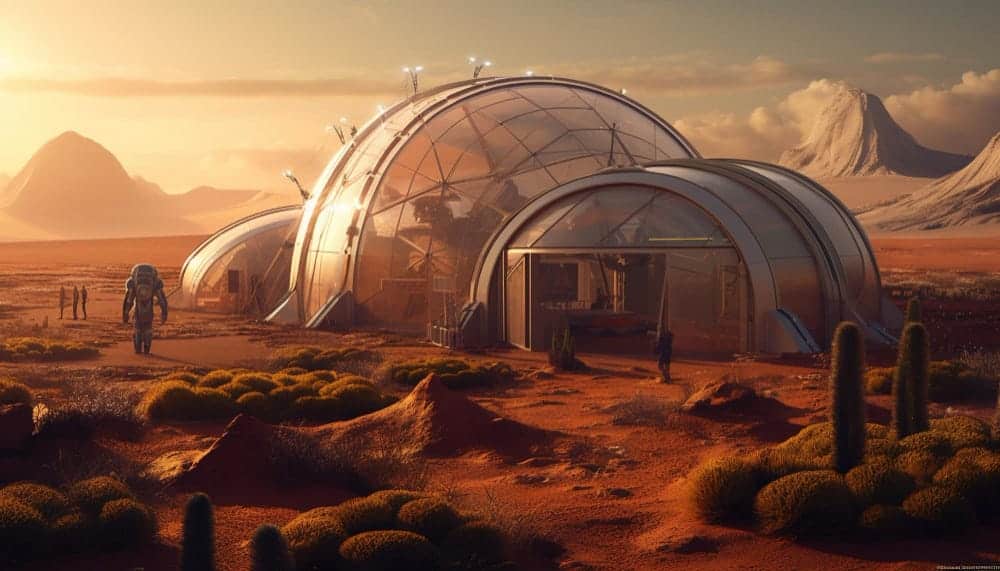
The rise of commercial ventures worldwide is not just limited to Earth but has also vastly expanded to other plants like Mars, famously called Martian real estate.
Many companies have ventured into selling plots of Martian land thanks to the public curiosity about space exploration and the whole proposition of owning land on Mars.
These enterprises often market their offerings through elaborate promotional campaigns showing images of Mars and empty lands with eye-catching certificates and meticulously crafted maps to lure buyers.
However, as a buyer, it is crucial to distinguish between the promise of owning a piece of Mars and the legal validity behind such transactions.
Despite real estate agents’ grand claims and advertisements, these commercial endeavors remain empty gestures without legal recognition. So, if you think of owning lands on Mars, that dream is not legally recognized by any government.
The absence of official regulatory oversight, potential misinformation, or superfluous claims by agents should raise a red flag for prospective buyers.
Furthermore, the possibility of establishing capitalism in Martian land raises broader questions about the commercialization of space and its impact on equitable access to celestial bodies and their scientific exploration.
3. Challenges and Ethical Considerations

Commercializing celestial bodies presents many challenges and ethical dilemmas beyond legal considerations. For instance, sovereignty and the fair distribution of space resources are among the primary concerns regarding space exploration.
The prospect of private entities claiming Martian territories raises concerns about monopolization, which can sideline collaborative efforts and restrict access to space for scientific personal pursuits, not for the upliftment of science and humanity.
Some ethical dilemmas also have broader societal implications. For instance, the potential spread of misinformation and unrealistic expectations about space exploration can turn the intent of scientific exploration into dirt, and space will just be left for doing business.
Additionally, we must carefully see the environmental impact of human activities on Mars and the ethical implications of altering an extraterrestrial environment, which we are not even fully aware of.
4. Scientific and Exploration Implications
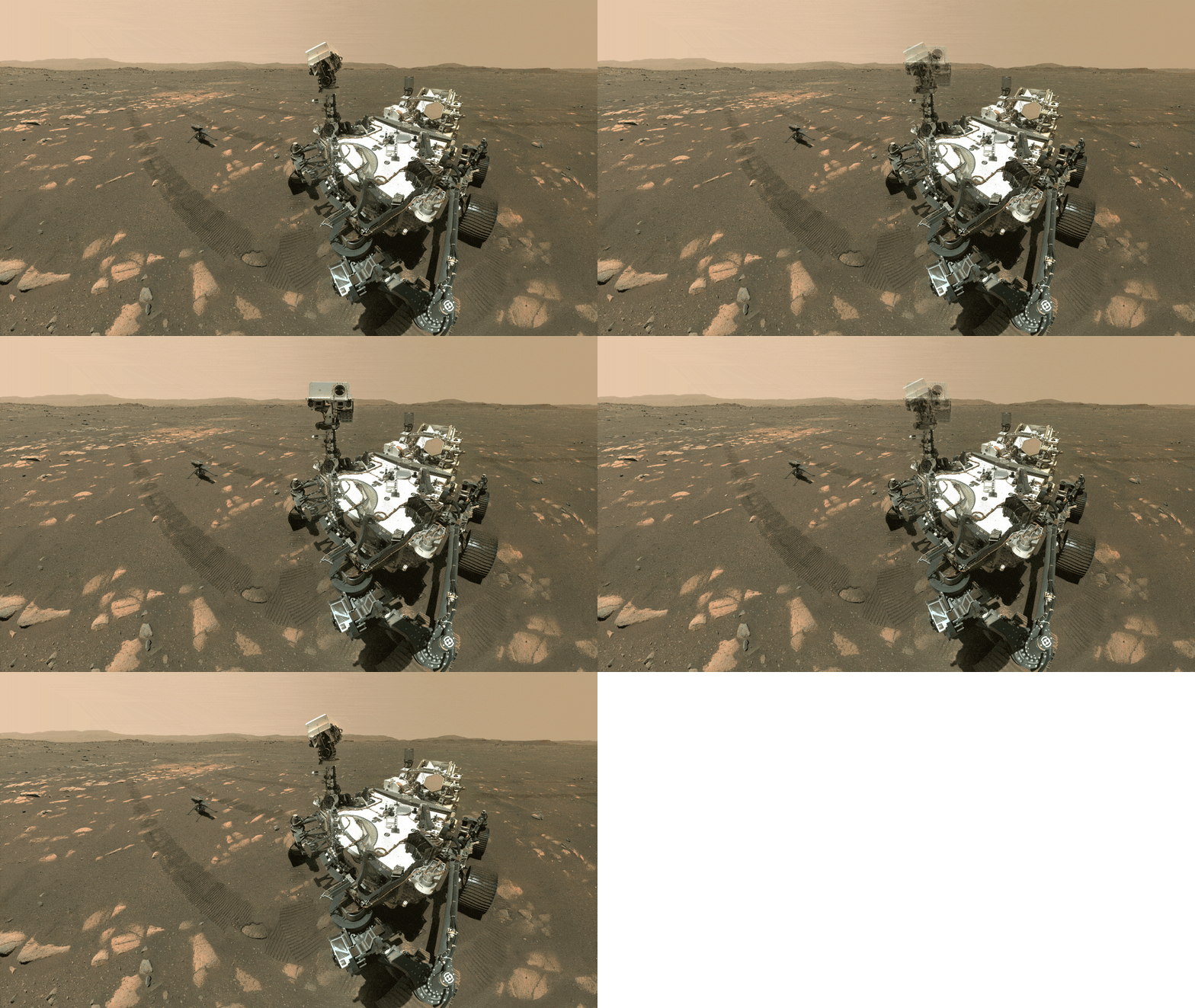
In present times, Mars holds the interest of several scientists, government, and space agencies. Everyone is excited about its scientific exploration and has sent numerous missions to know the Martian planet even more.
Allocating resources towards commercial ventures selling Martian real estate could potentially divert critical funding from transformative scientific missions to extorting the planet’s resources for personal gains.
Moreover, commercializing Mars risks undermining international collaboration, hindering collective efforts to deepen our understanding of the universe.
As we enter a new world marked by increasing commercialization in space exploration, we must balance commercial interests and scientific pursuits.
The need to balance becomes crucial in ensuring sustainable and equitable development in our presence beyond Earth and has the potential to uplift humanity.
Final Thoughts
In summary, while buying land on Mars may seem attractive, it remains more a conceptual dream than a practical or legal reality.
Several International treaties explicitly prohibit any individual or nation from appropriating celestial bodies like Mars as their property.
Although certain companies may offer certificates claiming ownership over Martian land, these documents hold no legal standing or recognition from international bodies or governments.
As humanity continues exploring and engaging with the cosmos, we must approach the commercialization of space cautiously, preserving the shared heritage of celestial bodies like Mars and ensuring accessibility and equity for all.
Frequently Asked Questions
Can We Buy Land on Any Planet?
Like no one is allowed to have any land ownership on Mars, other celestial bodies also have no legal standing or provision to buy the land. All the claims by various private property dealers are fake and are just there to lure prospective buyers into paying outrageous amounts and then dupe them.
Can Humans Even Live on Mars?
Our first requirement is to breathe without technical and medical support to live on Mars. In the current scenario, this is not possible as the environment of Mars is highly hostile due to the lack of atmosphere, extraordinary amounts of radiation, etc.