Every renovation creates dust. Tearing out old cabinets, sanding drywall seams, and refinishing floors all throw fine particles into the air, and those particles do not stay in the room where the work happens.
Within a few hours, a film of white powder can settle on furniture two rooms away.
Most of that mess is preventable. A little planning before demolition day, a few smart habits while the crew works, and some attention to your HVAC system keep dust from taking over the house. Here is how to stay ahead of it.
Seal Off the Work Area Before You Start
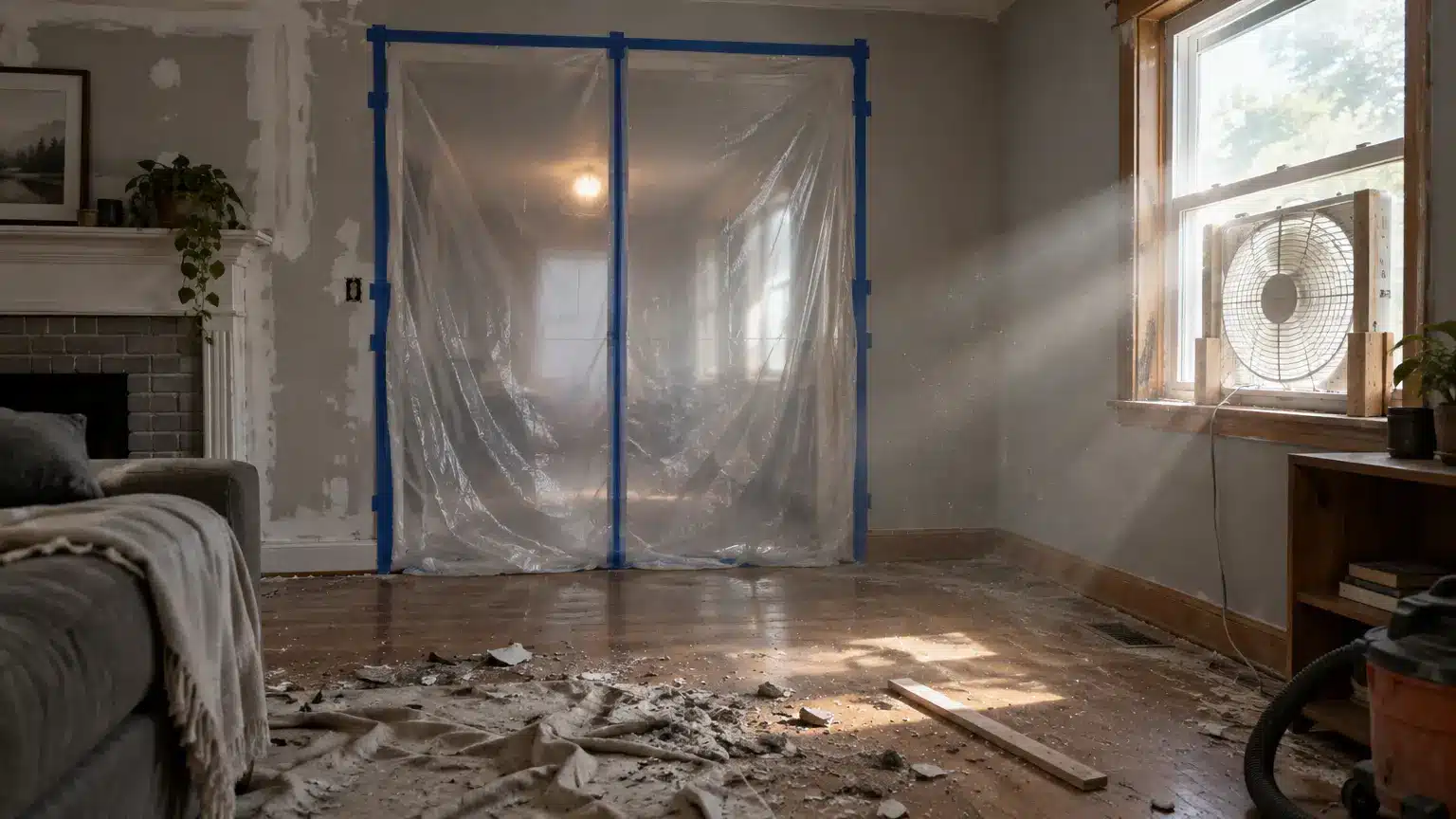
Containment is the biggest factor in how much dust ends up in the rest of your home. Hang heavy plastic sheeting from floor to ceiling across every doorway that leads out of the work zone, and tape the edges down with painter’s tape so it does not peel loose. A zippered door panel lets workers move in and out without tearing the barrier open each time.
Check for gaps you might overlook, such as open archways, pass-throughs, and the space around the doorframe.
If the room has a window, a box fan set in it and facing outward pulls air out of the space and creates slight negative pressure, which helps keep dust from drifting into the hallway.
Control Dust at the Source
Sealing a room helps, but it is better to produce less airborne dust in the first place. Kitchen demolition, bathroom tile cutting, and floor sanding are the worst offenders. A few habits make a real difference:
- Use a sander or saw with a dust-collection port connected to a HEPA vacuum.
- Cut tile and masonry with a wet saw instead of a dry blade.
- Clean up with a damp mop or damp sweeping compound rather than a dry broom, which kicks the powder right back into the air.
- Lay adhesive mats or damp towels at the exit so workers do not track dust through the house.
Ask your contractor what dust control they already use. Many pros bring their own extractors and barriers, and a quick conversation up front avoids surprises.
Protect Your HVAC System
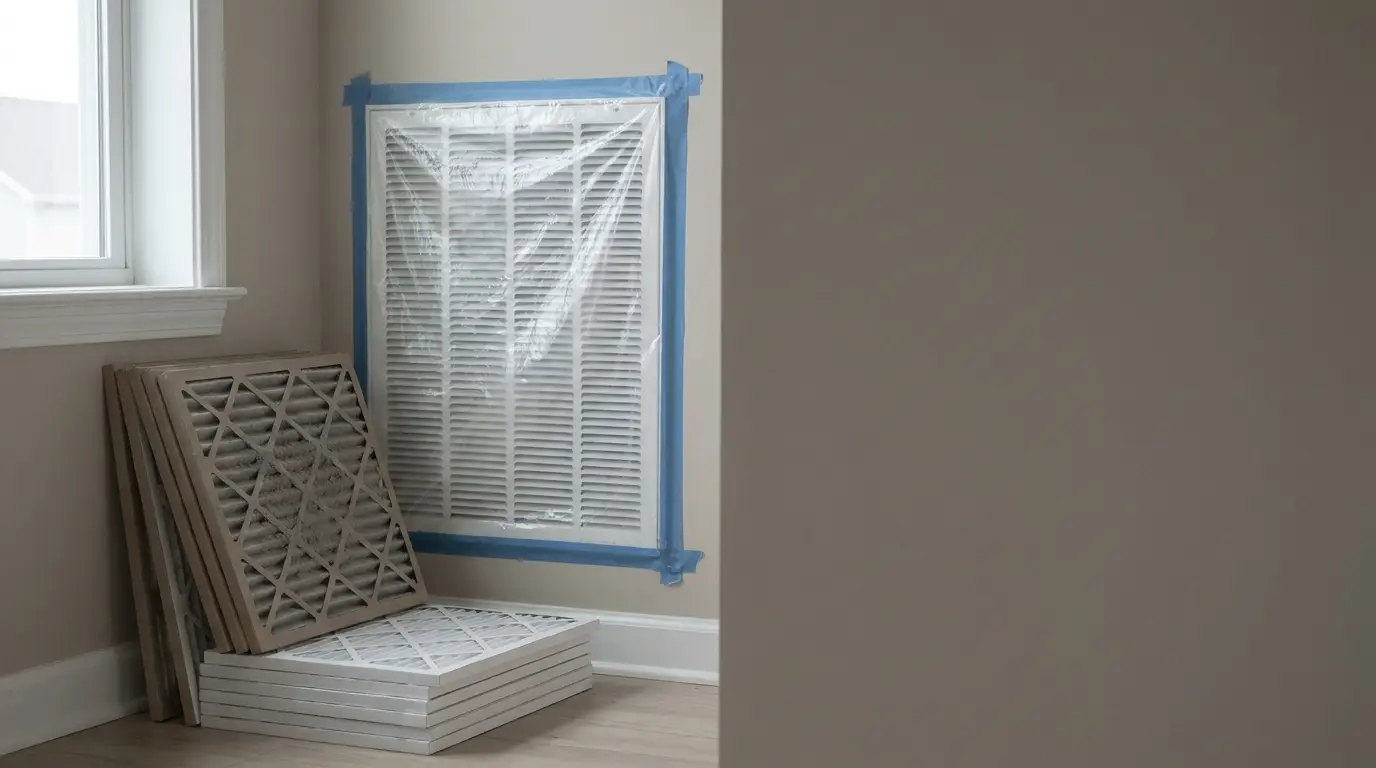
Your heating and cooling system is the fastest way for dust to travel from the work zone to every room in the house. If a return vent sits inside or near the renovation area, the system pulls fine dust straight into the ductwork and spreads it around.
Cover vents in the work area with plastic and tape, and consider turning the system off during the dustiest stages, such as drywall sanding.
Then look at the filter. During a remodel, check your air filters every couple of weeks, since construction dust can clog them far faster than normal use.
A clogged filter restricts airflow and makes the blower work harder, so keep a few spares on hand and swap one out as soon as it looks gray and packed. Put in a fresh one again when the project wraps up so the system starts clean.
Clean as You Go
Waiting until the end to clean gives dust days to settle into upholstery and carpet.
Wipe horizontal surfaces near the work zone daily, vacuum with a HEPA-rated machine, and run a portable air purifier in the adjacent rooms if you have one. Cover furniture and put small items in closed cabinets or bins before work starts.
Once the work is done, finish with a deep clean. Start high with ceiling fans, shelves, and vent covers, then work down to the floors so nothing you already cleaned gets dusty again.
Bottom Line
Dust control during a renovation comes down to three things: contain the work area, cut dust at the source, and keep your HVAC system from spreading what escapes.
None of it is complicated, but it takes some prep before the first hammer swing. Put the barriers up early and stay on top of cleaning, and the finished kitchen, bathroom, or floor will not come with a layer of grit on everything else you own.