
The Daily Rhythm of Lactational Fluctuations
Lactation is inherently dynamic. Unlike typical adult breast tissue, which maintains a relatively stable volume across weeks, a nursing parent’s breasts experience noticeable structural shifts throughout a single twenty-four-hour cycle. Between feeding and pumping intervals, ongoing milk production gradually fills the alveoli and ducts, altering both overall cup volume and tissue density.
Following an expression session, that volume recedes, leaving tissue softer and lighter. Clinical literature notes that breast volume can fluctuate significantly between pre- and post-expression states. Yet conventional intimate apparel remains anchored to static measurements taken at a single moment in time.
When applied to pumping bras, this disconnect between physiological reality and rigid garment construction creates persistent fit challenges that extend well beyond simple comfort.
The Limits of Static Measurements
Standard bra fitting—wrapping a measuring tape around the ribcage and across the bust—presumes a fixed baseline. In postpartum physiology, no such baseline exists. A measurement taken during morning engorgement yields a different cup requirement than one taken immediately after a midday pumping session.
For individuals navigating heavier tissue, finding the Best pumping bra for large breasts often becomes an exercise in compromise: sizing up to accommodate peak fullness can leave the bra too loose to support pump flanges later, while sizing down risks uncomfortable constriction. Garment design that relies on non-yielding cup dimensions inevitably struggles at one end of the fullness spectrum.
Flange Alignment and the Mechanics of Pressure
A pumping bra serves an engineering role distinct from standard lingerie: it must stabilize a mechanical breast pump flange securely against the areola while maintaining hands-free utility. Flange position is critical. If cup fabric lacks sufficient tensile recovery, the weight of milk accumulating in collection containers can pull the flange downward, causing friction and reducing expression efficiency.
Conversely, if the cup exerts excessive compressive force across the breast to hold the flange rigid, it risks obstructing milk ducts. Clinical protocols from the Academy of Breastfeeding Medicine on mastitis spectrum disorders note that localized external pressure—such as from overly tight undergarments—can contribute to ductal inflammation and tissue edema. Garment stability must stem from balanced structural support rather than focal compression.
Band Support Versus Cup Compliance
Resolving this balance requires decoupling the function of the band from that of the cup. The underband provides the primary structural anchor, stabilizing the garment against the torso so breast weight is distributed across the ribcage rather than pulling on shoulder straps.
In discussions around the Best pumping bra for plus size moms, band stability is particularly vital to prevent rolling or digging as posture changes. While the band requires firm stability, the cup panels demand compliance.
When cups are constructed with multidirectional stretch, they expand during periods of engorgement and recover after milk expression without altering the band’s position or applying excessive pressure to glandular tissue.
Daily Wear Patterns and Tissue Health
The physical demands of daily expression frequently raise a practical question: How long should I wear pumping bra each day? For those pumping multiple times daily or exclusively pumping, changing garments between sessions is inconvenient. Yet prolonged wear introduces specific considerations regarding skin health and fabric resilience.
Continuous pressure against warm skin can foster irritation, while textiles that lack permeability trap moisture. Health authorities generally encourage wearing non-restrictive, breathable apparel that allows the chest wall to expand naturally.
If a pumping garment is worn continuously through daily routines, its material must manage airflow and retain structural elasticity across repeated wash cycles without degrading.
Adaptive Design in Practice: The Elastic Mesh Approach
Addressing these variable fit demands has led apparel designers toward responsive material constructions. An example of this approach is seen in the Momcozy Bamboo – Ultra-Soft & Cool Breeze Pumping & Nursing Bra.
Rather than relying on rigid inner slings or heavy composite padding, the garment utilizes a fabric blend of 92% viscose and 8% spandex paired with a breathable elastic mesh panel. This construction provides hands-free pumping compatibility across a graduated C–H cup range, engineered to stretch as tissue expands before expression and recover gently as the breast empties.
By focusing on breathable elasticity and broader cup gradations, such designs attempt to accommodate daily volumetric shifts without requiring constant sizing adjustments. However, because tissue density, breast root width, and pump designs vary, adaptable textiles reduce rather than completely eliminate the need for individual evaluation.
Practical Checks for Assessing Dynamic Fit
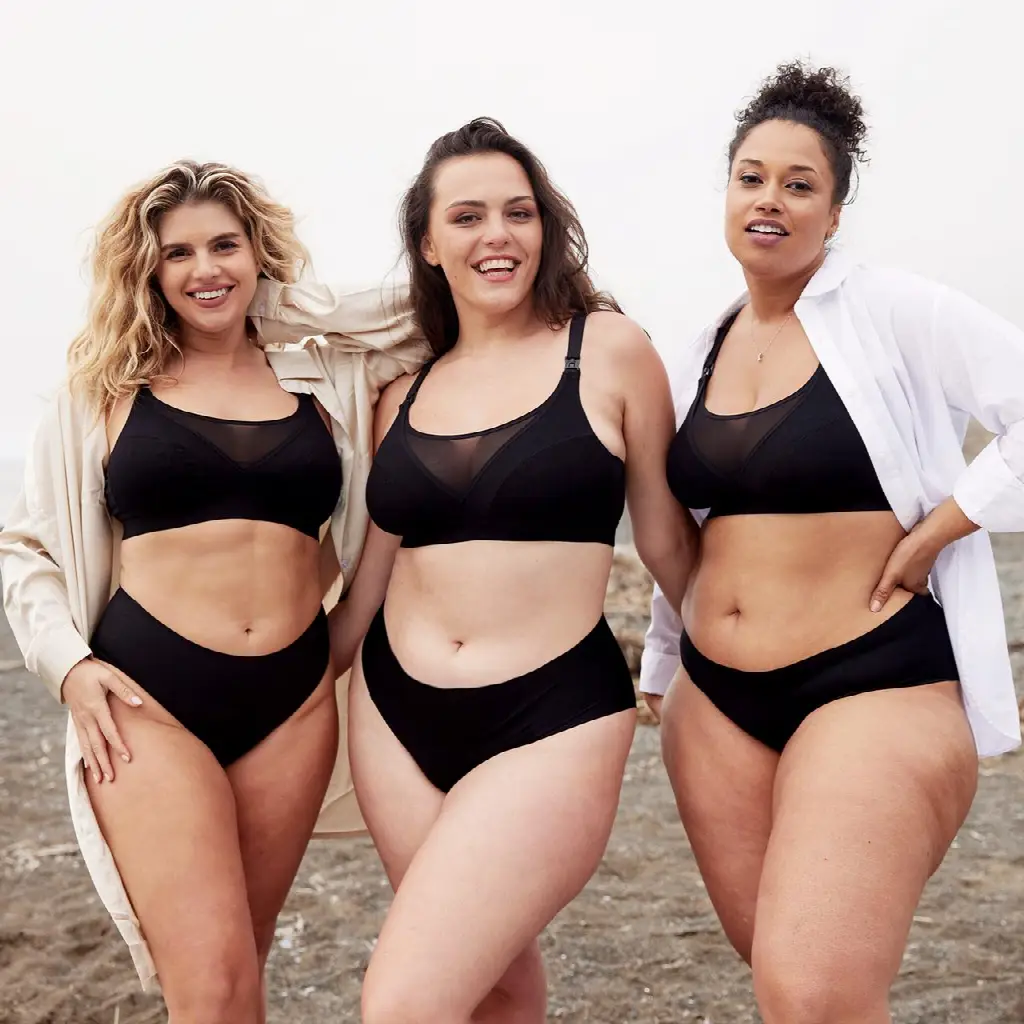
Determining whether a pumping bra accommodates daily fluctuations requires observing its performance across an entire pumping cycle. A functional fit should meet three clear criteria:
- During peak fullness, the cup edges should lie smoothly against the chest wall without pinching tissue or creating visible pressure lines.
- During active pumping, the flange should remain flush against the breast without slipping or tilting, even as milk enters the collection bottle.
- Post-expression, when tissue volume is lowest, the band should remain anchored without shifting upward, while the cup fabric maintains sufficient tension to prevent sagging.
Treating the pumping bra as a flexible support system rather than a static frame allows parents to prioritize physiological comfort alongside functional utility.