When a piece keeps getting stuck in the same place, practicing longer isn’t always the answer. Changing how you practice can be more useful. These eight common habits offer a starting point: choose one that sounds familiar and try its fix in your next session.
1. Playing the Whole Piece Top to Bottom Every Time
You sit down, press play in your head, and run the piece from bar one. You stumble in the same middle section, push through, and finish with the easy ending you already know. That can feel productive, but it leaves little time to fix the passage causing trouble.
Full run-throughs hide weak spots. Your hands get one quick pass at the hard bars and lots of extra reps on the parts you can already play. If you keep using the same awkward fingering or rushing the same beat, that pattern becomes familiar. Focused passage work gives you a chance to replace it with a more reliable approach.
Try flipping the order. Find the hardest four to eight bars and start there while your mind is fresh. Play that small chunk on a loop at a pace you can control. Then play the bar before it and the bar after it so the join holds together.
You don’t need to ban run-throughs. Use one at the start of the week to find trouble, and one at the end to test progress. Spend the sessions in between working on those weak spots.
2. Speeding Through Mistakes Instead of Slowing Down
When a passage won’t clean up, it can be tempting to keep trying at full speed and hope it comes together. If the same error keeps returning, slow down enough to identify its cause: a fingering change, a difficult leap or an uncertain rhythm.
Speed covers sloppy fingering and uneven rhythm. You might get through once by luck, then miss it the next three times. That inconsistency is a sign the tempo is beyond what your hands can manage right now.
Pick a practice tempo well below performance tempo. If the piece is marked allegro, set the Italian term aside for now and find a pace where each finger lands where you want it. Many teachers suggest a few clean repeats in a row before you nudge the pace up. Think of it as a loose guide, not a test you must pass.
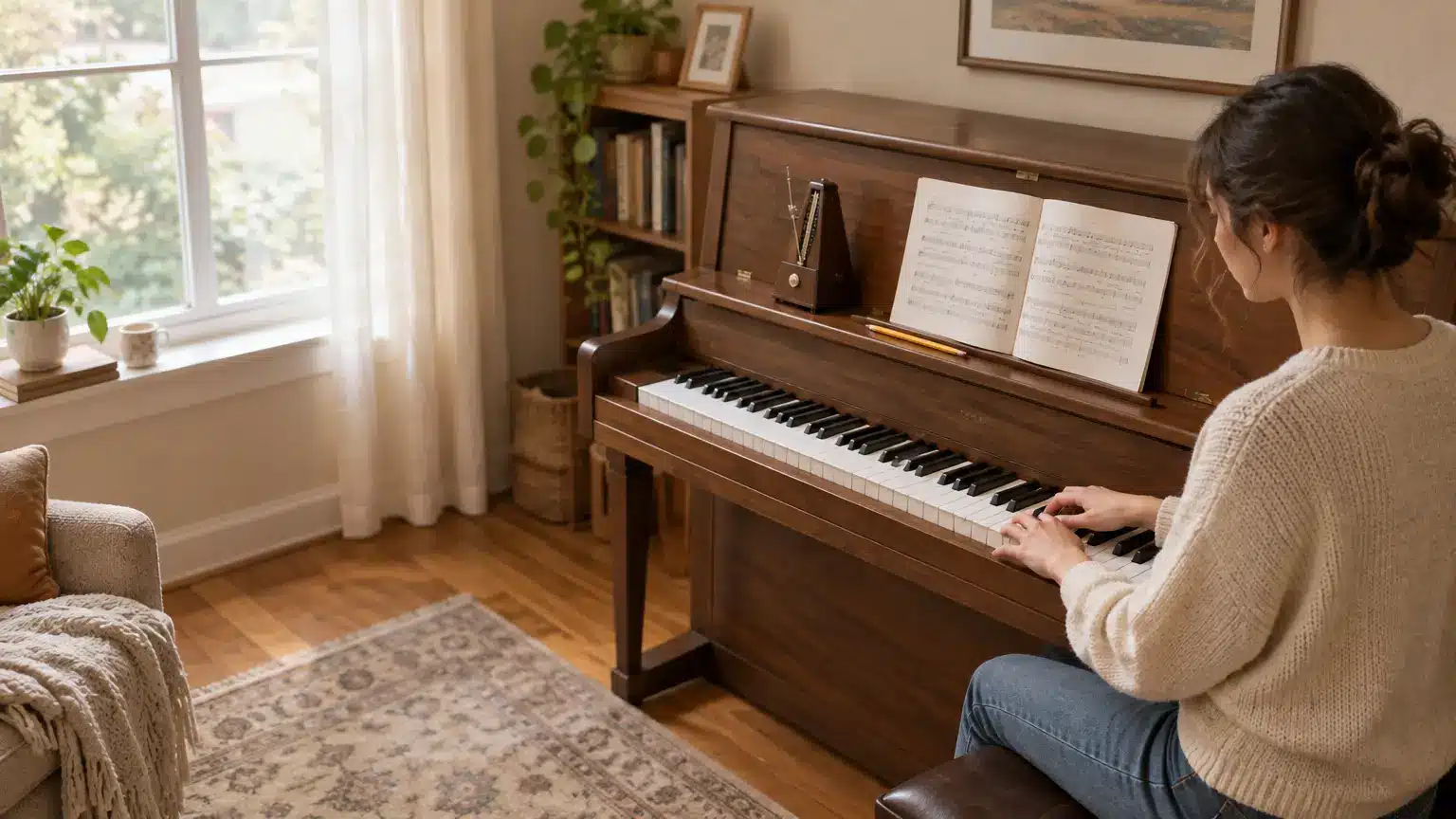
Write in the fingering with pencil and keep it the same each time. Changing fingers midweek forces your hands to relearn the same bars.
Listen for even sound between fingers. Notice whether particular notes rush or sound quieter than you intended. Slow work gives you time to hear that and fix it.
3. Practicing Without Steady Time
Rhythm is where self-taught players often drift first. Without a steady reference, you speed up through easy bars and drag in hard ones. It can sound fine from the bench. The unevenness becomes clearer on playback.
A metronome helps, but beginners often ask too much of it too soon. They turn it on at full speed, chase the clicks for a minute, then turn it off. That only adds stress.
Start well under your comfort pace. If you can stumble through at 100 beats per minute, try settling around 70 or 80 for a few days and subdivide in your head. Count soft sixteenths or eighths between clicks so short notes do not bunch up. When the beat feels easy and your hands stay relaxed, move it up a small step.
Use the metronome in short bursts. Five minutes on a hard passage can be plenty for many players. Then turn it off and see if you can keep the same steadiness alone.
If steady pulse is new, clap the rhythm away from the piano first. Get comfortable with it before bringing it back to the keys.
Tempo markings help here. Learn what largo, andante, moderato, and allegro roughly mean, but treat them as targets for later. Practice tempo is its own thing.
4. Saving Practice for One Long Weekend Session
A long Sunday session may seem easier to schedule than several shorter visits to the piano. But if you keep returning after a long gap and struggling to remember where you left off, try changing the routine.
Pay attention to when your concentration dips rather than pushing through a time target.
Try shorter sessions spread across the week. They give you more opportunities to revisit a difficult passage, notice what still needs work and return with fresh attention. A longer session can still be useful when you have time and feel comfortable; it just shouldn’t be your only way to practice.
You don’t need a strict formula. Many beginners do well with 15 to 20 focused minutes most days, with one day off if life gets busy. Put piano time where you can keep it. Mornings before messages or evenings after dinner both work if the slot is realistic.
If your setup lets you lower the volume or play with headphones, evening sessions get easier to keep. You disturb neighbours and family less, and feel less pressure to skip practice because it’s late.
Missing one day needn’t turn into missing three.
5. Ignoring an Uncomfortable Playing Position
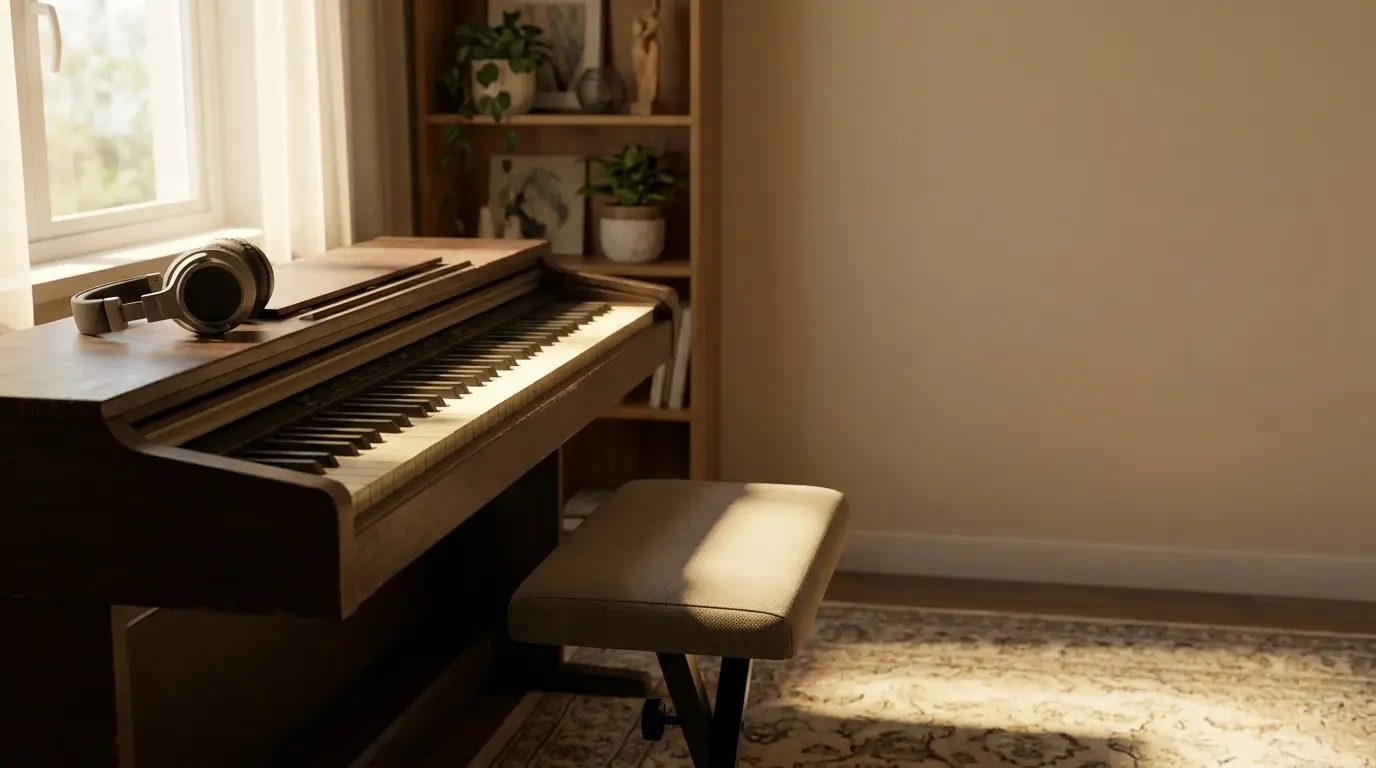
Before working on a difficult passage, take a moment to check your seat height and how you’re reaching the keyboard. Rushing straight in can make it easy to overlook an awkward position.
Aim for supported feet, relaxed shoulders and forearms roughly level with the keys. Let your fingers curve naturally rather than forcing them into a fixed shape. Avoid holding the wrists rigidly high or low.
A teacher can help adapt your position to your hands and the music you’re playing. If you feel pinching or sharp pain, stop. Rest and ask a teacher or appropriate professional for guidance before continuing.
Give yourself a short warm-up. A few minutes of a familiar five-finger pattern or an easy scale lets you check for even tone and comfortable movement. Use arpeggios if you’ve already learned them; a warm-up needn’t introduce another challenge. Play slowly and listen before moving to your piece.
Your setup matters more than most beginners expect. A piano that is hard to get to, too loud for evenings, or painful to play can cut your sessions short. Many beginners find a digital piano convenient because volume control makes daily work less disruptive.
Compare its key feel too; semi-weighted and weighted actions offer different levels of resistance. Weighting describes how the keys feel under your fingers. Touch sensitivity is separate. It controls how the sound responds when you press harder or softer.
Keep nails short and shoulders down. Tension can creep up without you noticing.
6. Sticking to Hands Together All the Time
Beginners tend to pick one mode and stay there. Some grind hands together from day one. Others stay hands separate for weeks and hope the join will sort itself out. Either approach can stall progress.
Hands-separate work is for fingering and notes. Play each hand alone until the moves feel sure and the rhythm is steady. Sing or count out loud if the timing wobbles.
This is also a chance to look at the score more often instead of staring at your fingers. Practice tracking the next notes on the page while letting your hands find familiar positions.
Hands-together work is a different skill. It tests balance and timing between hands. Bring them together early, but slower than you think you need. If the left hand rushes while the right hand sings, return to separate work for a bar or two, then join them again.
Try switching within the same session. Spend a few minutes on whichever hand needs attention, then join the same small passage slowly. End with a comfortable hands-together attempt and note what needs revisiting next time.
The balance can change. Use what the passage needs.
7. Playing Everything at One Volume With No Pedal Shape
If everything comes out at one loud level, music starts to sound like typing. Beginners often skip louds and softs because notes feel hard enough already. Pedal gets the same treatment. It stays down too long and blurs everything.
Exaggerate on purpose in practice. Play soft passages softer than feels normal and loud passages with clear weight, but without banging. Mark breaths and lifts with pencil so you don’t have to hold them all in memory. Notes about wrist lift or finger weight are more useful than vague reminders to add feeling.
Work on one color at a time. Take eight bars and play them all smooth and connected, then with the shape you want. Your ears learn the difference between flat and shaped much faster that way.
Treat the sustain pedal as a separate practice task. On a simple chord exercise, release the pedal as you play the new harmony, then press it again to sustain the new notes.
Listen for a clear change rather than a blur. Pedaling depends on the piece, so follow the score or your teacher’s guidance rather than using the same pattern everywhere. If your pedal feels jumpy or vague, slow down and listen for clean changes. A little pedal goes a long way.
Flat playing is common. With practice, you can give it more shape.
8. Picking Pieces That Are Too Hard and Never Listening Back
The wrong piece can drain enjoyment fast. You love the sound of a big romantic work, print all six pages, and three weeks later are still fighting line one. Practice turns into dread.
Pick music you can mostly get through slowly. As a loose check, you should be able to sight-read large parts at a very slow pace without stopping every beat. Fingering and rhythm still need work, but the notes are within reach.
If most of your session is spent decoding notes rather than working on the music, try an easier arrangement or ask a teacher for help. Keep the harder piece as a longer-term goal if it motivates you; progress doesn’t need a fixed deadline.
Small, manageable goals can make progress easier to notice. A short study you can polish teaches voicing and timing better than a long showpiece you can only survive.
Record yourself every few days. A phone on the music desk is fine. What sounds even while you play often sounds rushed and uneven when you listen back. Hands that felt together may not be. Dynamics you thought were clear may be missing.
Use the take to set one small goal. Clean the join in bars nine to twelve. Hold a steady pulse through the middle. Shape the last phrase softer. One target every few days keeps the work clear.
Good practice is not mysterious. Work small sections at slow tempos. Keep steady time with short daily reps. Stay loose and alternate separate work with joining hands. Shape the sound and pick pieces within reach. Listen back often and set one clear target. Give those habits a month and notice what feels more comfortable under your fingers.