
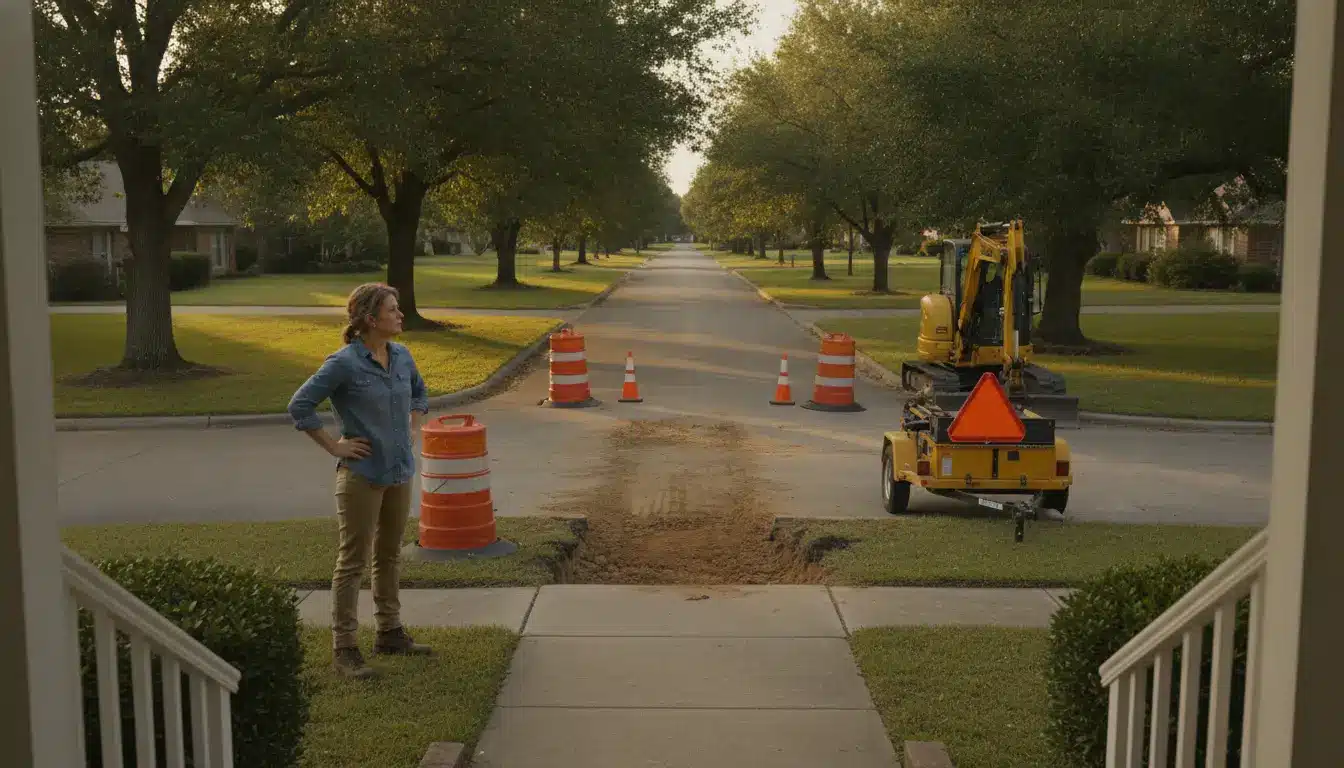
Road Work on Your Street: What Homeowners Should Know Before the Crews Arrive
If you have ever woken up to a bright orange notice taped to your mailbox, you already know the feeling. A road project is coming to your street, and suddenly you have questions nobody handed you answers to. How long will this take? Can you still get in and out of your driveway? Who do you call when a crew leaves a trench open over the weekend?
Most homeowners treat street construction as something that happens to them rather than something they can plan around. That is a missed opportunity.
Understanding how a work zone gets built, who is responsible for what, and which pieces of equipment signal which stage of the project gives you a much better handle on your own property. Here is what actually happens outside your window.
Read the Notice Before the First Truck Shows Up
Public works departments are required to give notice for most street projects, and that notice carries more useful detail than people assume. It usually names the contractor, the project scope, and a rough duration window. It often includes a phone number for a project manager, which is far more useful than calling the city’s general line once something goes wrong.
Take a photo of it. If a dispute comes up later about driveway access or damage to your lawn strip, having the contractor’s name and the project number on hand saves you a week of phone calls.
Two things worth confirming right away:
- Whether your driveway will be blocked at any point, and for how long
- Whether street parking will be suspended, and if permits or alternate parking are being offered
Who Sets Up the Equipment You See Outside Your Window
The gear that appears on your street overnight is not random. Every cone, sign, and flashing board is placed according to a traffic control plan that the contractor submits and the local agency approves.
That plan follows the Manual on Uniform Traffic Control Devices, the federal standard that governs how work zones are marked across the country.
Knowing what each piece does tells you roughly what stage the project is in.
Cones, Drums, and Barricades
These are channelizing devices. Their job is to guide traffic away from the work area and keep drivers in a defined path. Cones typically mean short-duration work that will clear by the end of the day. Plastic drums and Type III barricades signal something longer, often several days or weeks. When you see drums replacing cones on your street, plan for a longer disruption.
Arrow Boards and Message Signs
The large flashing board sitting on a trailer at the head of a lane closure is doing the heaviest lifting in the whole setup. It gives drivers a clear directive from several hundred feet out, well before they reach the point where they need to merge. That advance warning is what prevents the last-second lane change that causes most work zone collisions.
Municipal agencies, utility contractors, and private paving companies all keep this equipment in their own fleets rather than renting it project by project, since the units get used continuously through the construction season.
Taking a look at arrowboards for sale gives you a sense of the range in play, from compact trailer-mounted boards used on residential streets to full-size units built for interstate work. The unit parked at the end of your block is likely on the smaller end of that spectrum, which is a good sign. It usually means a lower-speed, shorter-duration setup.
Flaggers and Pilot Vehicles
If a live human in a safety vest is directing traffic, the crew is working within an active travel lane and speeds have been reduced. This is the most sensitive stage of any project. It is also when your driveway is most likely to be temporarily inaccessible, since flaggers control the flow in both directions on a single open lane.
Protecting Your Driveway Access and Your Property Line
Contractors are generally obligated to maintain reasonable access to private driveways, but “reasonable” gets interpreted loosely when a crew is behind schedule. Speak up early rather than after the fact.
A few practical steps that tend to work:
- Ask the project manager directly for the paving schedule for your block, since fresh asphalt is the one thing that genuinely blocks access for a set number of hours
- Move vehicles the night before rather than the morning of
- Photograph your lawn strip, sidewalk, mailbox, and driveway apron before work begins
That last one matters more than people expect. Damage to the apron where your driveway meets the street is the single most common point of dispute in residential road projects, and photos with timestamps settle the question fast.
Know Where the Public Right-of-Way Ends
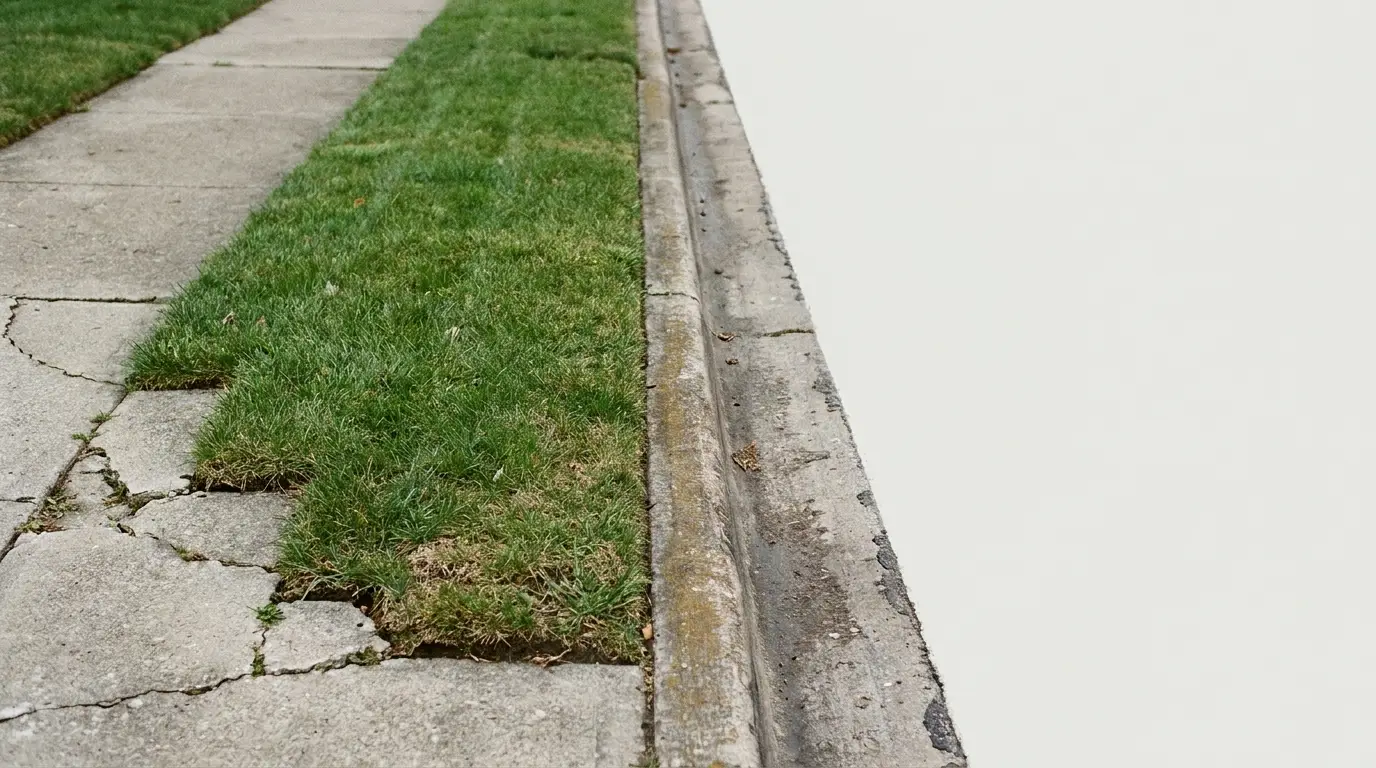
Here is the part that catches homeowners off guard. The strip of grass between your sidewalk and the curb is almost always public right-of-way, even though you mow it. The city can dig it up, remove a tree from it, or run a utility line through it without your permission.
Your sidewalk is a different story, and the rules vary widely by municipality. In many cities, the homeowner is responsible for maintaining and repairing the sidewalk fronting the property, even though the public has the legal right to use it.
If a crew removes a section of your sidewalk for a utility cut, confirm in writing who is restoring it and to what standard. That conversation is much easier before the concrete is broken than after.
Talk to Your Kids About the Work Zone
If you have children who walk to a bus stop or ride bikes on the block, the arrival of construction equipment changes their route in ways they will not think through on their own. Walk it with them once. Show them where the barricades create a blind corner, and point out that a backing truck with a beeper is not always visible to the driver.
Work zones near homes carry a specific risk that highway work zones do not, which is unpredictable pedestrian movement from people who consider the street theirs. A five minute conversation solves most of it.
Plan Around the Season, Not the Week
Road work follows the weather. In most of the country, the paving season runs from late spring through early fall, and projects get compressed into that window.
If your street is scheduled for work in August, that timeline is far more likely to hold than one scheduled for late October, when a cold snap can push a project into the following year.
If you have your own exterior work planned, whether that is a roof replacement, a driveway pour, or a delivery of landscaping material, check the street project schedule first. Coordinating your own contractor’s access around a lane closure is a small amount of planning that prevents a wasted trip and a rescheduling fee.
The Short Version
A road project on your street is disruptive, but it is not opaque. The notice tells you who is responsible, the equipment tells you what stage the work is in, and a set of timestamped photos protects you if something goes wrong at your property line.
Homeowners who ask questions in the first week almost always have a smoother experience than the ones who wait until the driveway is blocked.